 APREX · EST. 2026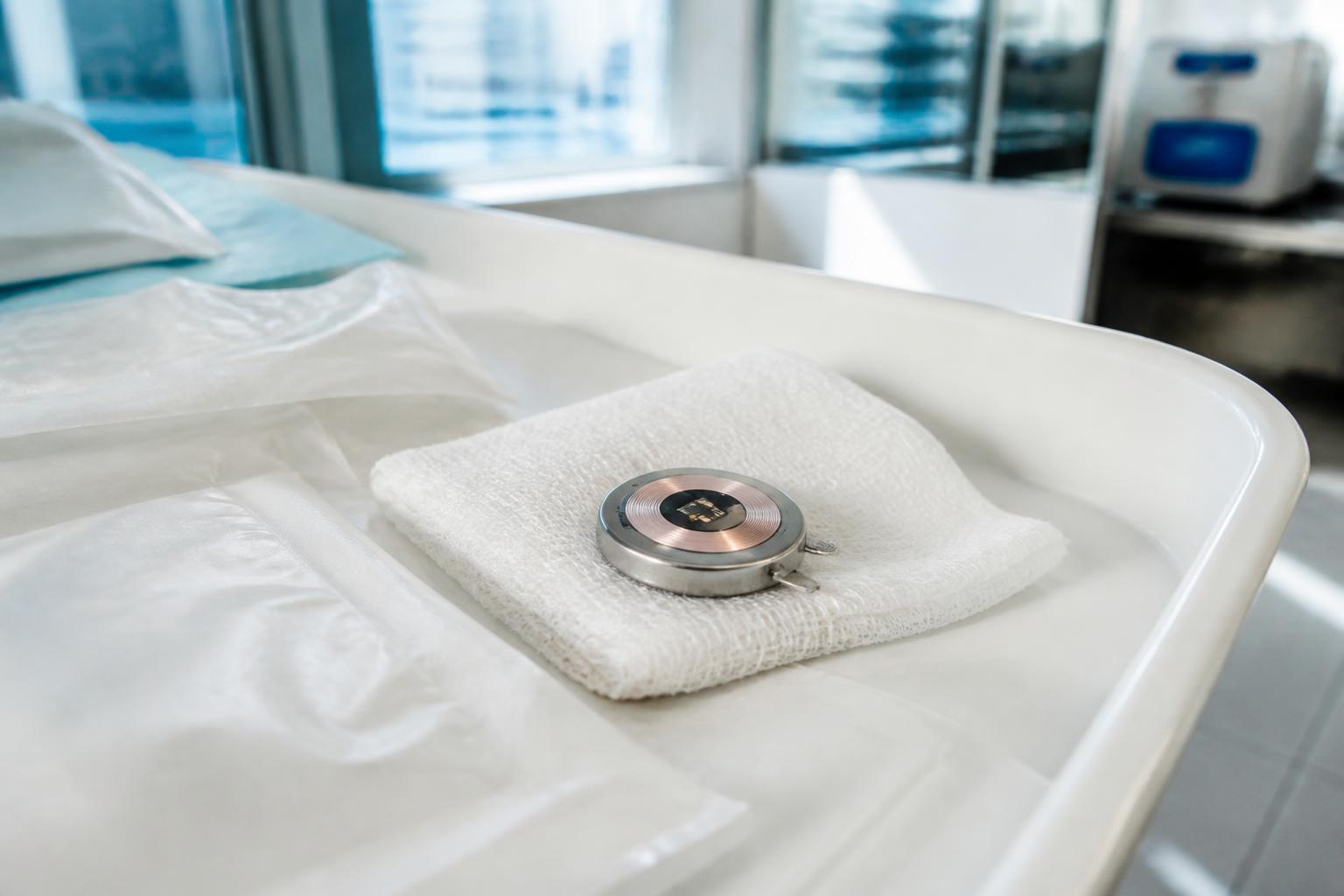
In a courtyard in China's Henan province last October, Dong Hui sat attempting something he hadn't managed in six years: holding a pen and writing. In 2020, the then-39-year-old was left paralyzed from the neck down following a car accident. With a small wireless implant placed on the outer membrane of his brain, he succeeded — slowly, but deliberately.
Dong Hui's story has become the human face of what many are calling a technological and regulatory breakthrough: on March 13, 2026, China's National Medical Products Administration (NMPA) approved the world's first commercial invasive brain-computer interface (BCI), according to MIT Technology Review.
NEO: An implant on the brain's surface
The system is called "NEO" and was developed by Shanghai-based company Neuracle Medical Technology. It is designed for quadriplegics — patients with paralysis in all four limbs — between the ages of 18 and 60.
Unlike Neuralink's system, which inserts electrodes directly into brain tissue, NEO uses an epidural approach: a coin-sized wireless implant is placed on top of the dura mater, the brain's outermost protective membrane, without penetrating the cerebral cortex itself. The manufacturer and regulators highlight this as a significant safety advantage, as the risk of direct tissue damage is substantially reduced.
The approval was granted following 36 clinical procedures — four preliminary feasibility studies and 32 full multicenter studies conducted in accordance with international Good Clinical Practice (GCP) standards, according to regulatory background documentation reviewed by 24AI.
A strategic state-level commitment
China's position as the first country in the world to grant such approval is no accident. BCI technology is explicitly named as a "future industry" in the country's 15th Five-Year Plan (2026–2030), and seven key central government ministries have committed to making China the global industry leader by 2030.
In December 2024, authorities introduced a so-called "green lane" for expedited approval of BCI products through Document No. 53. As early as March 2025, the National Healthcare Security Administration established a dedicated insurance category for BCI technology — paving the way for patients to actually access and afford the treatment.
Where does the US stand in the race?
By comparison, no invasive BCI systems have yet received commercial approval from the U.S. Food and Drug Administration (FDA). Neuralink's implant continues to operate under an Investigational Device Exemption (IDE) — a permit to conduct clinical trials, not for commercial use.
The FDA issued guidance in May 2021 for clinical testing of BCI devices in patients with paralysis or amputations, but the path to full commercial approval is considerably longer and more resource-intensive than China's fast-track process.
It is worth noting that both countries' regulatory frameworks classify invasive BCI implants as Class III medical devices — the highest risk category — but China's state-driven prioritization has resulted in a faster route to market.
Ethics and future questions
China's own Ministry of Science and Technology published ethical guidelines for BCI research in February 2024, which among other things caution against using the technology for cognitive enhancement in healthy individuals — particularly given the risk of exacerbating social inequalities. The guidelines also require dynamic informed consent and ongoing risk assessment throughout the course of treatment.
Researchers and ethicists internationally will likely watch closely as long-term data accumulates from commercial NEO patients. The approval marks a turning point, but questions around long-term safety, data privacy, and access are far from resolved.
For Dong Hui in Henan, however, it is something concrete and tangible that matters: he held a pen — and he wrote.