 APREX · EST. 2026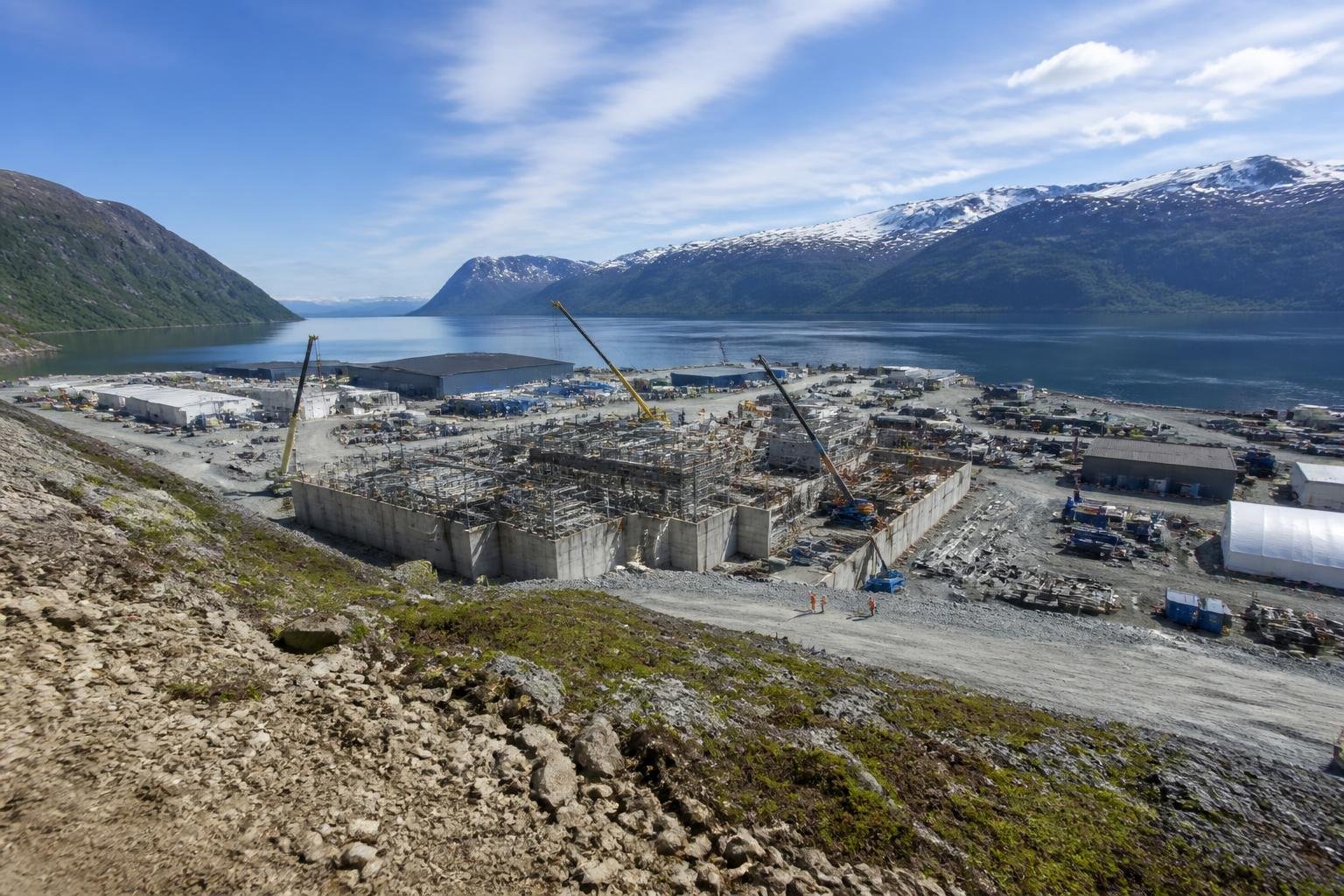
One of Norway's most talked-about infrastructure projects in artificial intelligence is now raising a fundamental question about state accountability: Who decided that Norwegian taxpayers should share in the risk of a billion-kroner project run by one of the country's most controversial business figures?
2.2 Billion from Eksfin
Export Finance Norway (Eksfin), the state-owned company tasked with promoting Norwegian exports, has committed to providing approximately 2.2 billion kroner in financing to the Nscale data centre currently under construction in Narvik, according to Digi.no. The project is described as the single largest investment in AI infrastructure in Norway to date.
The total financing package amounts to roughly 7.3 billion kroner and includes private banks such as ABN AMRO, DNB, Nordea, and SEB. In addition, Nscale has secured a further approximately 7 billion kroner in debt financing, with an option to expand by an equivalent amount to fund a 115 MW extension of the facility.
The Export Argument
Eksfin's mandate requires that projects it finances must have an export share of well over 50 percent. The justification for Nscale's eligibility is that the company sells its data centre capacity as services primarily to foreign customers – and that this therefore qualifies as service export.
Nscale has publicly confirmed agreements with Microsoft and OpenAI for the Narvik campus. The company was founded and is led by Josh Payne, but the Aker system – controlled by Kjell Inge Røkke – holds a substantial ownership stake.
Narvik has everything large-scale AI infrastructure demands: abundant renewable hydropower, natural cooling, and outstanding financing through Eksfin — Josh Payne, CEO of Nscale
Yet it is precisely this structure that raises questions: Is it sufficient for a project to sell services to foreign tech giants for Norwegian state capital to take part in its financing? And who is responsible for explaining that to the public?
The Narvik Facility: What Is Being Built?
According to available information, the Narvik facility is planned as a 500 MW data centre capable of housing up to 250,000 Nvidia GPUs – initially 100,000. The facility will be powered by 100 percent renewable hydropower and is designed with liquid cooling that is expected to reduce water consumption by up to 90 percent. Surplus heat is planned for use by nearby low-emission businesses in the region.
Pax Silica and the Geopolitics
In May 2026, Norway officially joined the US-led "Pax Silica" alliance, an initiative designed to secure AI supply chains among allied nations and reduce dependence on non-allied countries such as China. Minister of Trade and Industry Cecilie Myrseth stated in that context that the initiative "could give Norwegian companies better access to advanced technological value chains."
Alliance membership grants Norwegian data centres, research institutions, and companies priority access to advanced AI chips such as Nvidia's H100, H200, and B200 series – without the delays and compliance challenges faced by non-allied buyers.
This geopolitical dimension is also cited as part of the rationale for state involvement: Norwegian control over AI infrastructure is described as an element of a national "sovereign AI" strategy.
The Questions That Go Unanswered
Nevertheless, it is the lack of transparency that lies at the heart of the criticism as raised by Digi.no. It is not unusual for Eksfin to finance export-oriented Norwegian businesses. But the fact that one of Norway's most controversial investors – Kjell Inge Røkke, who has among other things maintained corporate structures in Switzerland and been the subject of repeated Norwegian media scrutiny – holds a major stake in a project receiving state export financing in the billions, should naturally be able to withstand thorough public examination.
According to Digi.no, journalists and others find it virtually impossible to obtain concrete answers from the relevant authorities and parties regarding the reasoning behind the decision. That in itself is a story worth following.
Norway is positioning itself as a European hub for AI infrastructure – with legitimate natural advantages including hydropower, a cold climate, and existing cable infrastructure. But when billions in public funds are involved, transparency about process and rationale is not a bonus – it is a requirement.