 APREX · EST. 2026
Small models, bigger ambitions
The AI industry has long chased larger models. Microsoft's Phi series goes in the opposite direction: can we get more out of smaller models by training them smarter?
Phi-4-reasoning is a 14 billion parameter model aimed at complex reasoning tasks. It has been published on Hugging Face under an MIT licence, and the technical report shows how Microsoft has focused on mathematics, logic, and structured problem-solving.
Why this matters
Large models can be impressive, but they are expensive to run. For many organisations, the question is more practical: what can we run locally, cheaply, and quickly enough to actually be used?
Phi-4-reasoning points toward an answer. If a smaller model can handle much of the math, code, and analytical work, it can be deployed in schools, laboratories, internal tools, and edge environments without cloud bills spiralling out of control.
Small models are no longer just compromises. They are design choices.
The vision variant makes it more interesting
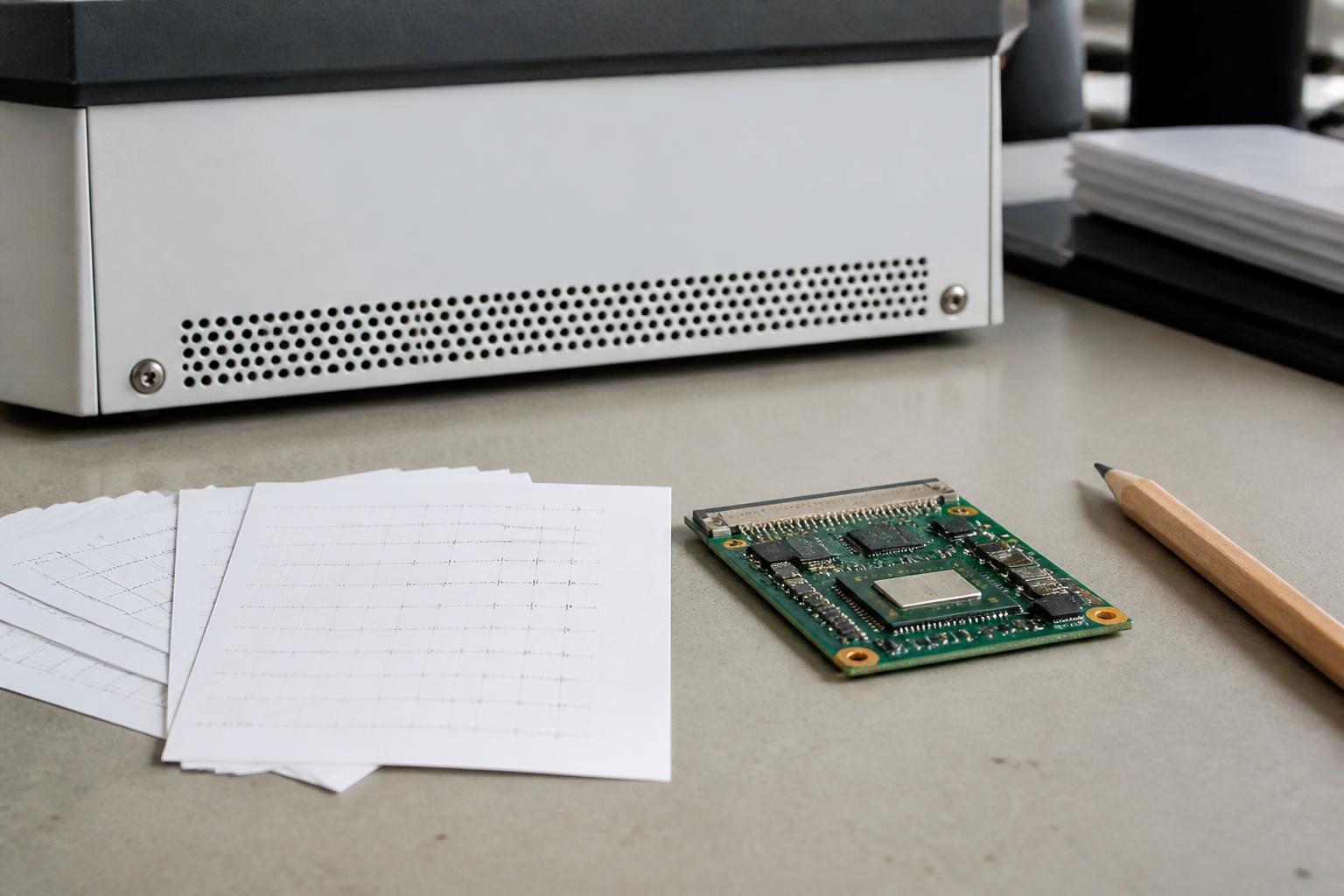
Phi-4-reasoning-vision-15B takes the idea further into image and text. It is built for scientific and mathematical reasoning, user interface understanding, and tasks where the model must interpret visual context.
That opens the door to local assistants capable of analysing forms, diagrams, lab images, or screenshots. For education and research, this can be more compelling than a massive model that only exists behind a remote API.
The limitations are real
Phi-4-reasoning is not a universal replacement for frontier models. Small models can be weaker on broad world knowledge, multilingual nuance, and long unstructured conversations. Domain-specific use cases must be tested explicitly.
But precisely because the model is small and open, it can be evaluated, fine-tuned, and deployed in a more controlled manner.
Conclusion
Phi-4-reasoning demonstrates that open AI is not only about giant models. It is also about efficient, specialised models that can sit closer to the user.
This is an important direction: local AI in schools, research, the public sector, and industry needs models that are affordable enough to become everyday tools.