 APREX · EST. 2026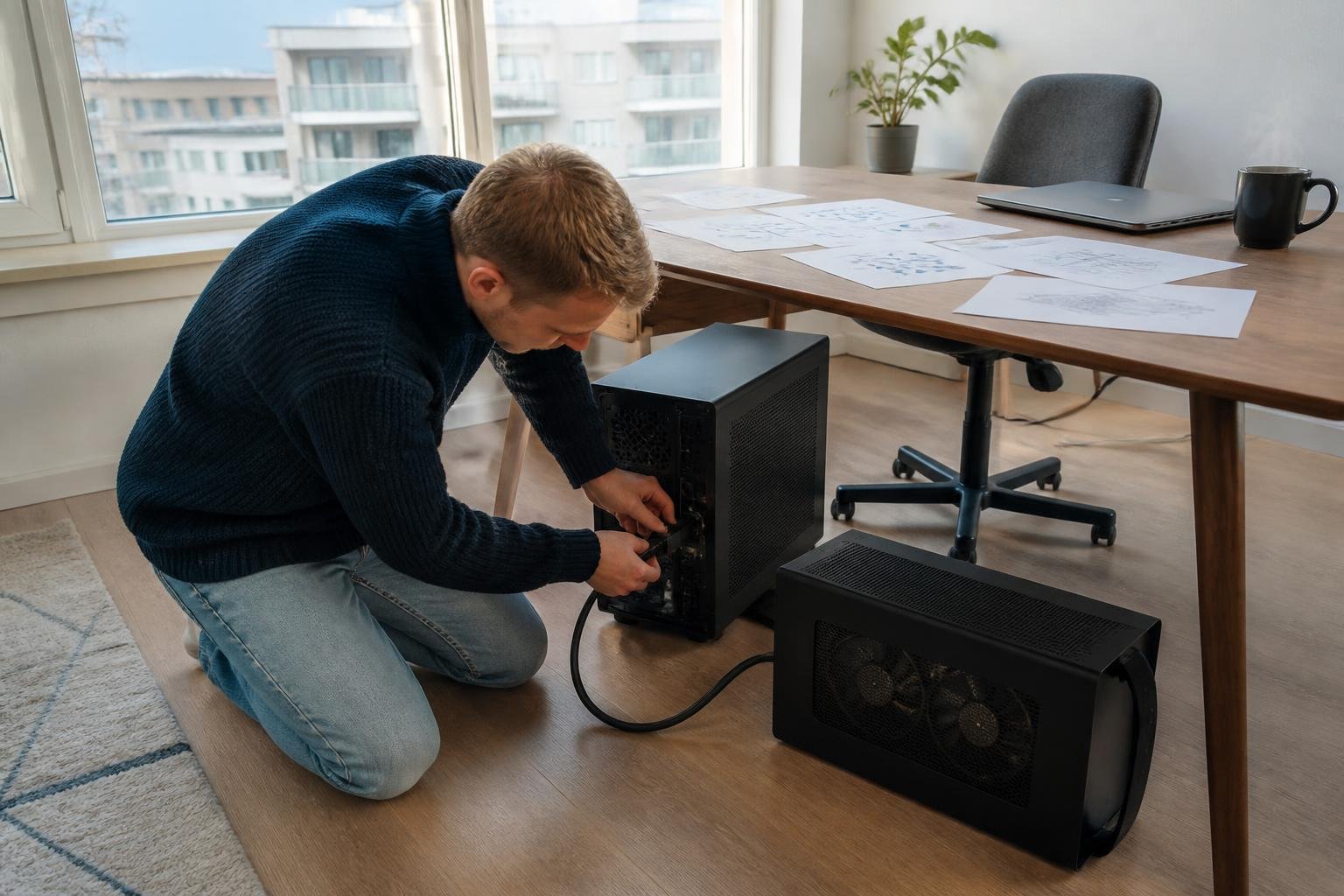
OpenAI Was "Open" in Name Only — Now It's for Real
For six years, OpenAI built one of the world's most valuable closed-source empires while keeping "Open" in the name. GPT-3, GPT-4, GPT-5 — all locked behind paywalls and API gates. Critics laughed. Competitors seized the market. Now OpenAI is striking back with what may be the most consequential open source move in AI history.
> "Broad access to these capable open-weights models created in the US helps expand democratic AI rails."
> — OpenAI, February 2026 (openai.com)
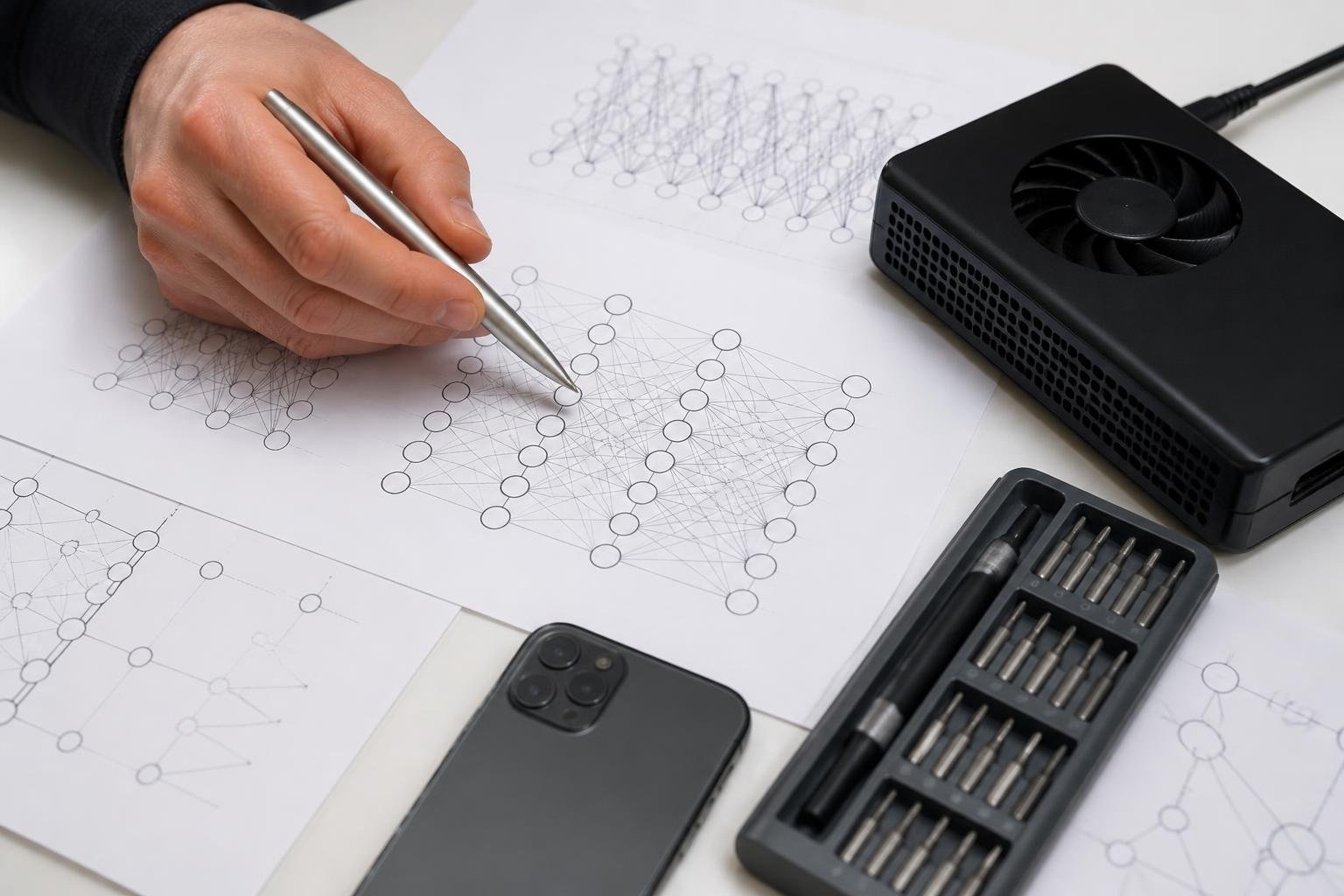
Two Models. One Revolution.
| Feature | gpt-oss-120b | gpt-oss-20b |
|---|---|---|
| Total parameters | 117 billion | 21 billion |
| Active parameters per token | 5.1 billion | 3.6 billion |
| Architecture | MoE | MoE |
| Context window | 128,000 tokens | 128,000 tokens |
| Minimum hardware | Single 80GB GPU | 16GB consumer GPU |
| License | Apache 2.0 | Apache 2.0 |
| AIME 2025 score | 92.5% | Not separately published |
| MMLU-Pro | 80.7% | — |
| LiveCodeBench v6 | 81.9% | — |
| GPQA | 80.9% | — |
Sources: openai.com, llm-stats.com, aiacademy.hk
MoE: The Secret Behind the Impossible
How does a 120-billion-parameter model run on a single GPU? The answer is Mixture of Experts (MoE). Instead of activating all 117 billion parameters for every token, the model dynamically selects only 5.1 billion of them — the most relevant experts for that specific task. The result is dramatically reduced memory demand without sacrificing quality.
Add MXFP4 quantization — a technique that compresses numerical representations with minimal loss — and suddenly a model that should require a data center can run on hardware available at any consumer electronics store.
Positional encoding via RoPE (Rotary Position Embedding) ensures both models handle context windows of up to 128,000 tokens. That's roughly 100,000 words — or an entire novel.
FACT BOX: What Is the Apache 2.0 License?
Apache 2.0 is one of the most permissive open licenses available. It allows anyone to:
- Use the model commercially without paying royalties
- Modify and redistribute freely
- Integrate into proprietary products
The only condition: retain the license notice. For businesses, this is close to a dream scenario.
The Numbers Making Competitors Sweat
On AIME 2025 — one of the most demanding math benchmarks in existence — gpt-oss-120b scores 92.5%. That places it well above OpenAI's own o3-mini, and according to analysis from llm-stats.com, the model approaches o4-mini performance on reasoning tasks.
On MMLU-Pro (80.7%), LiveCodeBench v6 (81.9%), and GPQA (80.9%), the model delivers numbers that just one year ago would have required access to closed frontier models with sky-high API costs.
And now OpenAI is giving it away for free.
The Timeline That Tells the Real Story
2015 — OpenAI founded with an explicit promise of openness and democratization of AI
2018 — GPT-1 released openly. The promise is kept.
2019 — GPT-2 launched, but OpenAI withholds the full model for months over "safety concerns." First crack in the promise.
2020 — GPT-3. API only. No weights. The closed era begins.
2023–2025 — GPT-4, GPT-4o, GPT-5. All closed. OpenAI's valuation shoots past $300 billion.
October 2025 — OpenAI launches gpt-oss-safeguard (reported by Techmeme): open source reasoning models for safety classification tasks, 120B and 20B, Apache 2.0. A soft launch of the strategy.
February 25, 2026 — gpt-oss-120b and gpt-oss-20b officially launched (openai.com). The strategic return to openness is complete.
Why Now? It's About Survival
The answer is simple: Meta, DeepSeek, and Qwen won the open source arena while OpenAI sat guarding profit margins.
Meta's Llama series has become the default choice for thousands of companies wanting to avoid vendor lock-in. DeepSeek R1 shocked the industry in January 2025 with frontier-level performance at a fraction of the cost. Qwen from Alibaba is pressing from Asia.
Aiacademy.hk describes OpenAI's current strategy as "open source the periphery, close source the core": release the powerful but not the very newest models openly — and keep the sharpest edges for paying customers. gpt-oss-120b is formidable, but it is not GPT-5.
That's deliberate. And it's smart.
> "gpt-oss is not altruism. It's competitive policy wrapped in openness."
What Can It Actually Do?
gpt-oss is not just a chatbot you fine-tune on your own data. The model supports a complete set of agentic capabilities:
- Function calling: connect the model to external APIs and tools
- Web browsing: the model can search and retrieve information in real time
- Python code execution: direct code running in a sandboxed environment
- Structured outputs: guaranteed JSON-formatted responses for system integration
- Configurable reasoning effort: choose between low, medium, and high "thinking power" as needed
- Full chain-of-thought visibility: see every reasoning step the model takes
For developers building agent systems, this is a complete platform — not just a model.
Safety: No Red Flags
OpenAI has conducted safety analyses and concludes that neither model represents high risk, even under aggressive fine-tuning (openai.com). This is an important distinction: many open source models can be manipulated into bypassing safety barriers through targeted training. OpenAI claims gpt-oss holds firm.
This is supported by the parallel launch of gpt-oss-safeguard in October 2025 (Techmeme) — dedicated reasoning models for safety classification, also open, also Apache 2.0. OpenAI is building an open safety layer around its open models.
What Does This Mean for You?
For businesses: High-volume inference — customer service, code assistance, document analysis — can now run internally without API costs. A company sending one million requests per day to GPT-4o pays tens of thousands of dollars monthly. With gpt-oss-120b, the cost is hardware and electricity.
For emerging markets and resource-constrained organizations: A hospital group in Southeast Asia, an education startup in Africa, a government agency in South America — all can now use frontier-class AI without paying licenses to Silicon Valley.
For developers: Full chain-of-thought, fine-tuning, agentic tool use, and Apache 2.0 freedom. That's the complete package.
KEY FIGURES
🔢 117 billion total parameters
⚡ 5.1 billion active per token
📖 128,000 token context window
🏆 92.5% on AIME 2025
💻 1 single 80GB GPU is enough
📅 February 25, 2026 — launched
BOTTOM LINE
gpt-oss is not OpenAI having an epiphany about openness. It is a carefully calculated competitive strategy move that happens to be enormously beneficial for the rest of the world. OpenAI has released a model that surpasses o3-mini and approaches o4-mini, runs on consumer hardware, has full agentic functionality, and is free to use commercially forever under Apache 2.0.
Competition from Meta, DeepSeek, and Qwen forced this move. But regardless of motivation: the result is that powerful AI technology just became accessible to millions of people and organizations who couldn't afford it before.
That is a win for openness — even if openness was purchased by fear.
Verified against 3 open primary sources (openai.com, llm-stats.com, aiacademy.hk) and 2 independent analyses (Techmeme, CSDN/Sohu with caveats regarding date conflicts). Note: Some Chinese-language sources cite August 2025 as the launch date — this is assessed as incorrect based on OpenAI's official primary source confirming February 25, 2026.