 APREX · EST. 2026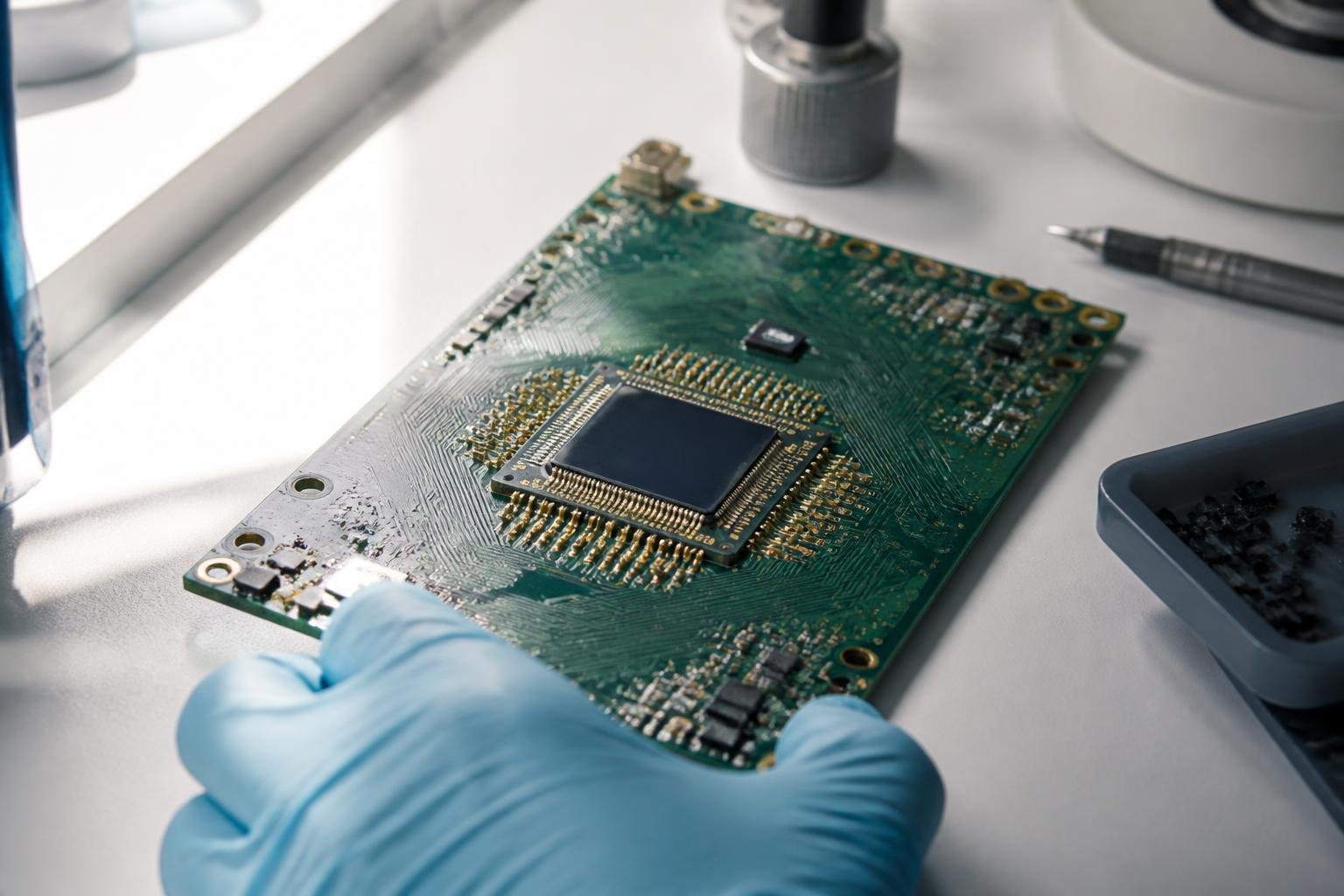
OpenAI is taking a major step toward technological independence. The company has for the first time unveiled an internally developed AI processor — an application-specific integrated circuit (ASIC) codenamed "Jalapeño" — according to Digi.no. The chip marks a shift in the company's infrastructure strategy and is intended to reduce its dependence on third-party GPU suppliers, primarily NVIDIA.
Built Exclusively for Inference
Unlike NVIDIA's versatile H100, which handles both AI training and inference, Jalapeño is built solely for inference tasks — that is, the processing that occurs when a fully trained model responds to user requests in real time. This is the task that ChatGPT, Codex, and the OpenAI API perform billions of times each day.
According to available information, the architecture has been built from the ground up to minimize costly data movement in large language model clusters, a well-known performance bottleneck in inference workloads. The chip uses a large compute chiplet combined with High Bandwidth Memory (HBM).
Jalapeño runs inference at roughly half the cost of a typical AI GPU, according to Broadcom CEO Hock Tan

Developed at Record Speed Using AI
One of the most remarkable aspects of Jalapeño is the speed of its development. From the first design step to a production-ready tape-out took just nine months — an extremely fast timeline by industry standards. OpenAI attributes this to the use of its own AI models in the design optimization process, pointing to a possible future norm for semiconductor development.
Collaboration partner Broadcom has previously assisted Google with the development of its TPUs (Tensor Processing Units), giving the company solid experience with exactly this type of specialized chip. TSMC, the world's leading manufacturer of advanced semiconductors, is producing Jalapeño.
Performance Claims That Warrant Scrutiny
Broadcom CEO Hock Tan has stated that Jalapeño's performance is comparable to NVIDIA's Blackwell generation and Google's TPUs. OpenAI itself reports significantly better performance per watt compared to "current state-of-the-art inference products." It is worth noting, however, that these claims come primarily from the companies themselves, and no independent benchmarks have been published to date. Such performance figures should therefore be read with a critical eye until third-party validation is available.
Rollout at Gigawatt Scale
The initial deployment of Jalapeño is planned for late 2026, with substantial volumes expected throughout 2027 and full production capacity in the first half of 2028. The chip will be rolled out in gigawatt-scale data centers in partnership with Microsoft and other partners.
OpenAI describes Jalapeño as "the first step in a multi-generation compute platform." The ambition is clear: to build a proprietary AI infrastructure that gives the company greater control over capacity, costs, and development — rather than remaining at the mercy of NVIDIA supply in a market defined by scarcity and high prices.
How the chip actually performs under real production conditions remains to be seen. But the signal is unmistakable: the major AI players are betting heavily on owning their own silicon future.