 APREX · EST. 2026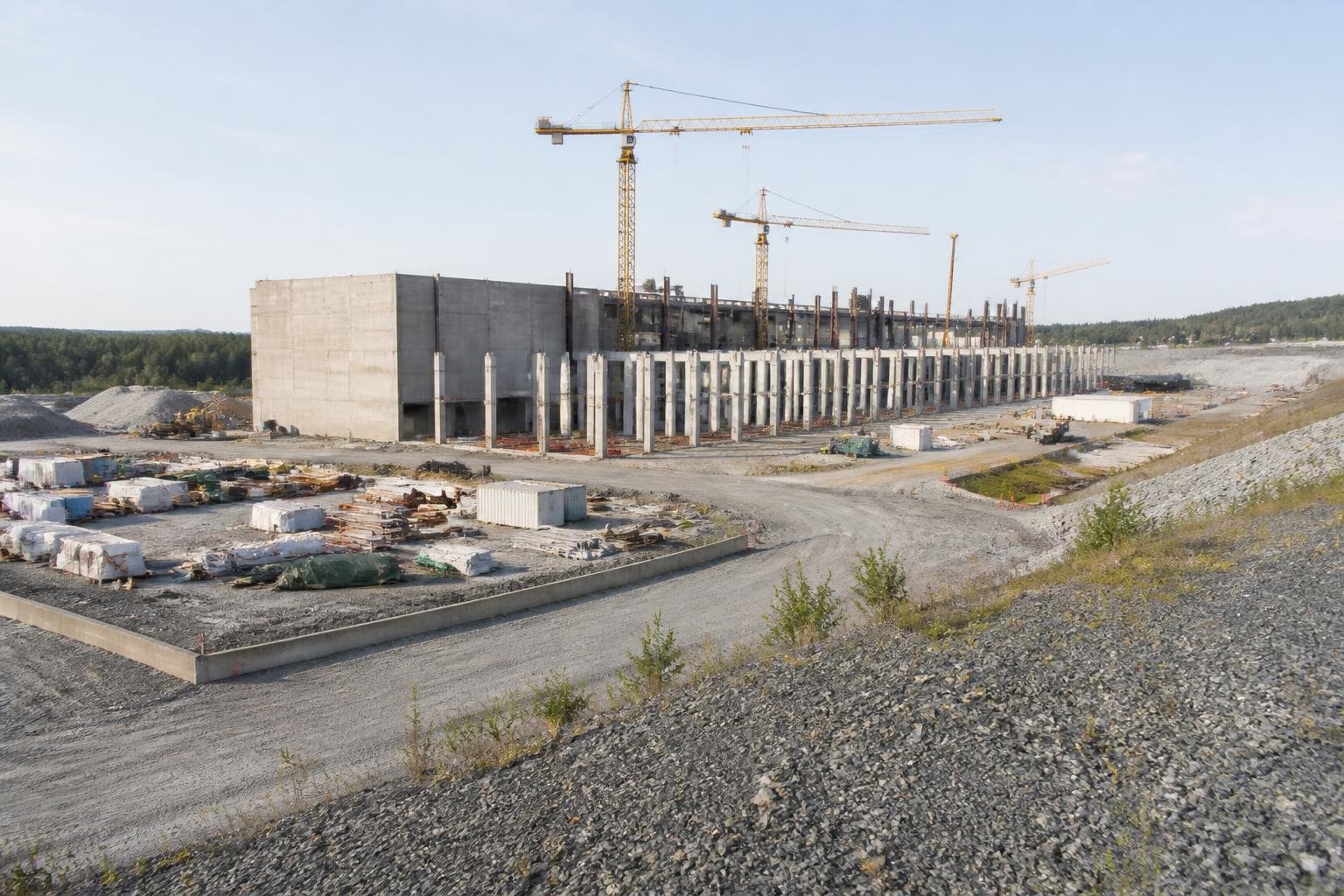
Oracle finds itself in the middle of one of the most aggressive financial transformations in the company's history. Over the past fiscal year, the tech giant has shed nearly 21,000 employees, borrowed enormous sums, and directed all available capital toward a single goal: becoming a leading player in AI infrastructure and data centers.
Mass Layoffs Used to Fund Growth
A workforce reduction of this magnitude — 21,000 positions, representing close to 13 percent of the total headcount — leaves Oracle with roughly 141,000 employees worldwide. According to source materials, the cuts are directly linked to the internal adoption of AI technology and are viewed as a measure to free up funds for the massive infrastructure investments the company is now undertaking.
In fiscal year 2026, Oracle's capital expenditures (capex) reached approximately $55.66 billion — surpassing its own target of $50 billion. Projections for fiscal year 2027 are even more ambitious.
Debt-Financed Expansion on a Record Scale
To fund the expansion, Oracle plans to raise close to $40 billion in 2027 through a combination of new debt and equity issuance — including an already-announced $20 billion equity offering. In the prior fiscal year, the company raised $43 billion in new debt.
This leaves Oracle with a highly exposed debt profile: the company carries more than $160 billion in total obligations, of which roughly $133 billion is directly tied to AI infrastructure buildout, according to JPMorgan analysis cited by Barron's. Its cash holdings, by comparison, stand at under $40 billion.
The debt-to-equity ratio stood at 432.51 percent as of December 2025 — a level far above what is considered normal even for capital-intensive technology companies.
Analysts Sound the Alarm: "The Canary in the AI Bubble"
The reaction from the financial community has been far from uniformly positive. The stock fell between 8.9 and 12 percent after Oracle disclosed its updated capex projections in June 2026. The share price is, as of the same point in time, down 49 percent from its 52-week high of $345.72.
Technology analyst Jacob Bourne of EMarketer describes Oracle as "the canary in the AI bubble's coal mine" — a warning that what the company is experiencing may foreshadow broader market corrections.
Sanchit Vir Gogia, chief analyst at Greyhound Research, describes a "profound shift in Oracle's capital strategy," in which the company has moved from funding growth through retained earnings to using debt- and bank-led structures — models typically associated with telecom-scale infrastructure, not software companies.
OpenAI Risk: Half the Revenue Pipeline From a Single Customer
One of the most widely discussed risks is the concentration of exposure to a single customer. Credit rating agencies warned as early as September 2025 that nearly half of Oracle's remaining performance obligations (RPO) came from OpenAI alone.
The ultimate risk lies in OpenAI's viability — a company with $13 billion in annual revenue and plans to spend $1.4 trillion on AI capacity
Scott Bickley of Info-Tech Research Group notes that this creates a critical vulnerability: if OpenAI's growth trajectory fails to materialize as planned, the consequences will hit Oracle hard.
Luke Yang, technology equity analyst at Morningstar, is blunt in his assessment: Oracle is "spending more than it earns" and "pushing itself to the limit," making the entire strategy "highly risky if AI-related demand is not as strong as expected."
What Could Go Wrong?
Analysts point to three primary risk scenarios:
Overestimated demand: If the market for AI data capacity does not grow quickly enough, infrastructure values could collapse, leaving Oracle with enormous debt and little return.
Stranded assets: If AI momentum fades, already-built data center capacity could sit idle — so-called "stranded infrastructure."
OpenAI dependency: If OpenAI reduces its commitments to Oracle, a significant portion of the company's future revenue base disappears.
Oracle's strategy represents one of the most extreme bets on AI infrastructure that any single company has made. The outcome will likely answer whether the AI boom is sustainable enough to support investments of this scale — or whether the debt burden will ultimately prove too heavy to bear.