 APREX · EST. 2026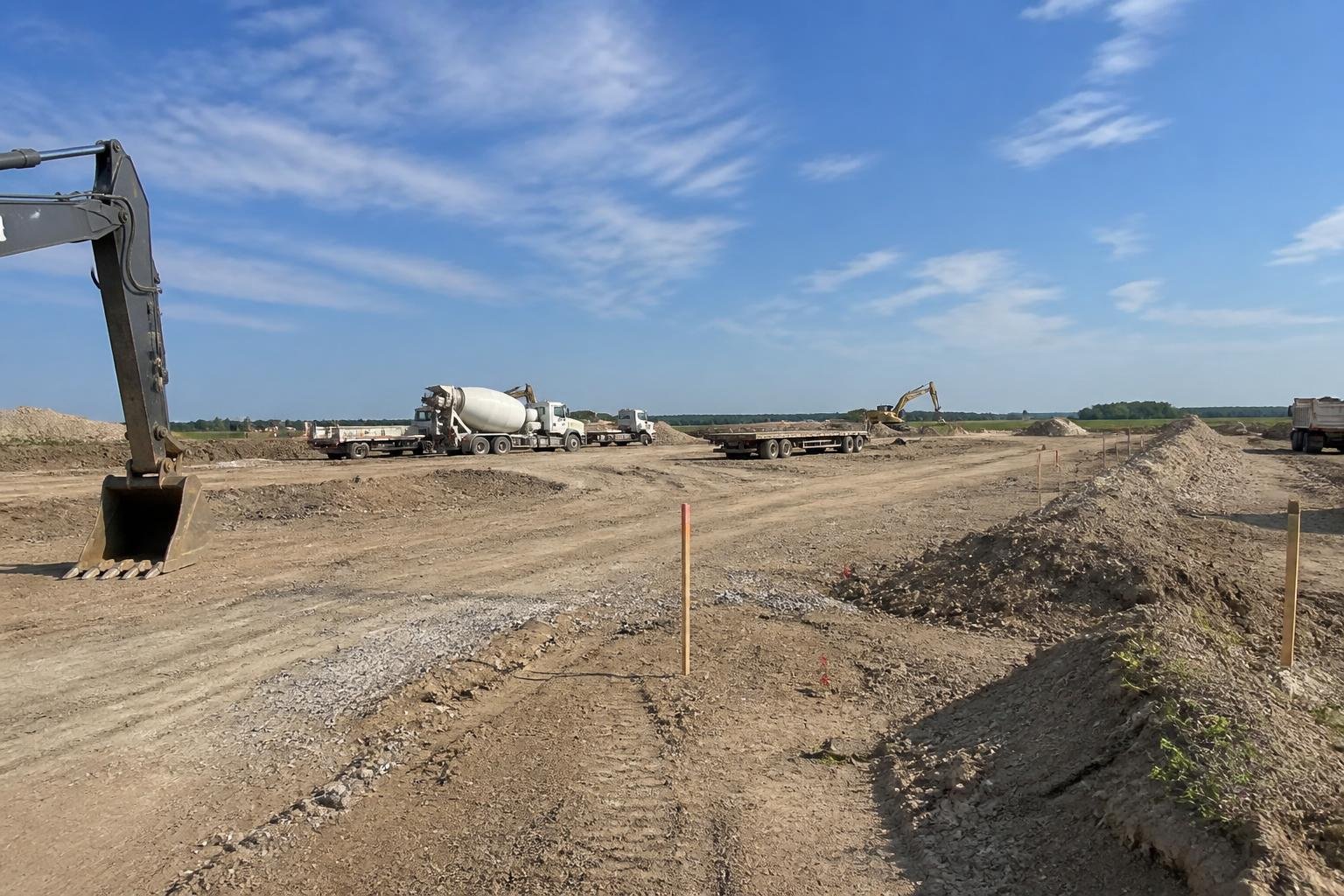
Groundbreaking took place on June 1, 2026. On a 62-acre site southwest of Ann Arbor in Washtenaw County, Michigan, what has been announced as the most ambitious data center complex in U.S. history — and perhaps the world — is now taking shape. The project, internally known as "The Barn," is part of OpenAI's broader Stargate initiative and is being developed in partnership with Oracle.
A facility of historic proportions
The complex will consist of three single-story buildings, each approximately 549,000 square feet, totaling nearly 1.65 million square feet under roof. Electrical capacity is planned at one gigawatt, and according to Reuters and other outlets, operational capacity could in practice reach up to 1.4 GW — enough power for approximately one million homes, according to OpenAI's own estimates cited in project documents.
OpenAI's budget for building the infrastructure itself is around $16 billion. Oracle is investing an additional $40 billion to equip the buildings with computing infrastructure. The combined project cost is therefore estimated at $56 billion.
To put the power capacity in perspective, it is roughly equivalent to half of Norway's total installed hydropower capacity — illustrating the enormous scale of the project.
Jobs and tax revenue
According to information from OpenAI's blog and project documents, the project is expected to create more than 2,500 union construction jobs during the building phase and 450 permanent positions once the data center is operational. In addition, the facility is estimated to generate one billion dollars in tax revenue over the lease term — averaging more than $150 million per year — which is intended to benefit local schools and public services.
Michigan Governor Gretchen Whitmer has publicly backed the project, calling it the single largest investment in the state's history. Utility provider DTE Energy will supply the facility with power from existing resources, supplemented by new battery storage fully funded by Oracle. According to project documents, DTE has pledged to freeze rate increases for at least two years if the data center becomes operational as planned, and estimates that the agreement will deliver net savings of around $300 million to existing customers.
The first phase of construction is expected to be completed in 2027, with the entire complex scheduled to be ready in early 2028.
Oracle describes this as the single largest economic investment in Michigan's history — with a total value of $56 billion.
Significant local opposition
Despite the impressive figures, the project has met strong resistance from the local community. Saline Township's board originally voted against the development but reversed course after the developer filed a lawsuit.
Environmental organizations and neighbors have raised concerns about several aspects of the project:
Controversially, at least 19 Michigan municipalities have imposed temporary moratoriums on new data center development as a direct response to the case, according to local media and industry publications such as Datacenter Dynamics.
Stargate and America's AI infrastructure push
Stargate is a broad initiative to build AI infrastructure across the United States, and the Michigan project is one of several planned facilities. OpenAI argues in its blog that such infrastructure is necessary to democratize access to artificial intelligence and strengthen the United States' position internationally.
Critics remain unconvinced. Key questions persist: Who pays the real energy bill? And can a state with ambitious climate goals absorb a facility with a power demand larger than many mid-sized cities — without sacrificing its green transition?
Those answers will be decisive, not just for Michigan, but for every region now competing to attract the next generation of AI infrastructure.