 APREX · EST. 2026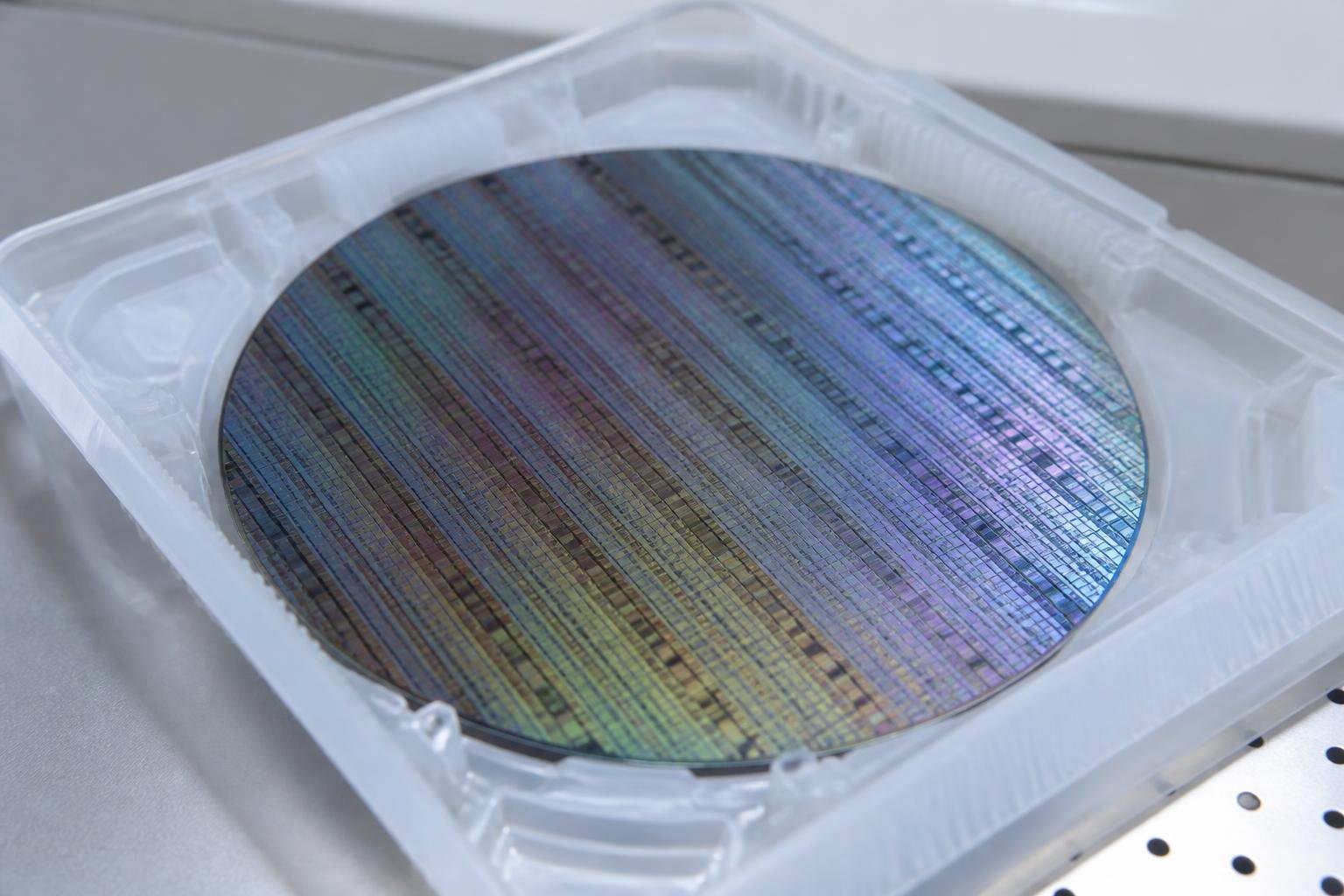
AI company Anthropic is in discussions with South Korean chipmaker Samsung about developing and manufacturing a custom AI chip, TechCrunch reports. The news comes just one week after OpenAI unveiled its own chip partnership with semiconductor giant Broadcom — signaling an accelerating race among major AI players to break free from dependence on third-party suppliers.
Early stage, big ambitions
According to available information, the talks between Anthropic and Samsung are still in a preliminary phase. There is currently no finalized design, no defined performance targets, and no concrete production timeline. The possibility that the project could be abandoned along the way remains real, which means the news should be read with a degree of caution.
The discussions reportedly center on using Samsung's upcoming 2-nanometer manufacturing process. It is an ambitious choice — but not without risk. Samsung's foundry division has historically struggled with production yields on its most advanced process nodes, a well-known weakness compared to industry leader TSMC.
Broadcom CEO Hock Tan has warned that laboratory prototypes often stall when mass production meets the real world.

Strategic hire hints at direction
That Anthropic has serious intentions is supported by a concrete personnel development: the company recently hired Clive Chan, an early and central member of OpenAI's internal chip development team. The recruitment is widely interpreted as a clear signal that Anthropic wants to build in-house expertise in AI hardware.
Today, Anthropic's Claude models rely on a broadly diversified hardware stack that includes chips from Nvidia, Google's TPUs, Amazon's Trainium and Inferentia processors, and solutions from Broadcom. The company has emphasized that a diversified approach to hardware will remain central to its strategy — even if proprietary chips were to become a reality.
A market in explosive growth
Anthropic's move mirrors a broader industry trend. Companies such as Meta, Amazon, and now OpenAI have all invested heavily in custom silicon to take control of their infrastructure, cut long-term costs, and reduce supply chain vulnerability.
Sales of custom AI chips are expected to grow by 45 percent in 2026 — far outpacing the 16 percent forecast for traditional GPU shipments, according to market analyses. The custom ASIC market alone is projected to reach 118 billion dollars by 2033.
Revenue growth intensifies the pressure
The backdrop for this push is dramatic growth in Anthropic's business volume. The company's annualized revenues have surpassed 30 billion dollars — up from around 9 billion at the end of 2025. That explosive growth increases the need for stable and scalable compute capacity, making it harder to rely exclusively on external chip supply.
Developing proprietary chips is, however, a demanding and costly undertaking. Industry estimates suggest that development costs alone can exceed 500 million dollars, with timelines typically stretching over several years. OpenAI's own partnership with Broadcom — widely regarded as unusually fast at nine months — is the exception rather than the rule, made possible by Broadcom's deep expertise in ASIC design.
Anthropic's path toward its own chips is therefore not a straight line, but a long-term and uncertain process in which the collaboration with Samsung currently represents just one option among several.