 APREX · EST. 2026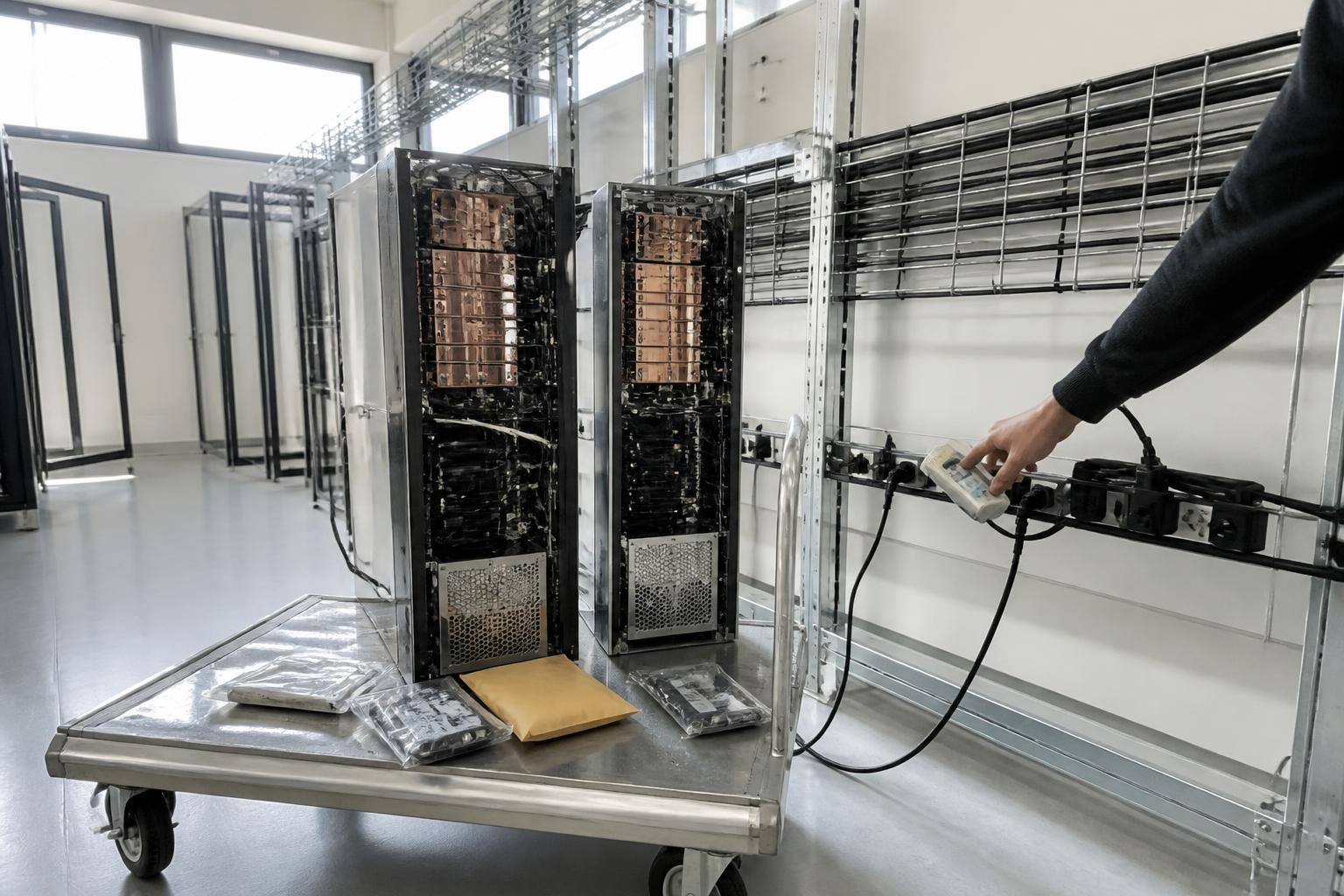
Open enterprise AI is getting serious
Cohere has released Command A+, and the launch touches on something many Norwegian technology leaders have felt for a long time: should advanced AI be a cloud service you rent, or a model you can actually control yourself?
According to Cohere, Command A+ is the company's fastest and most powerful language model to date, built for agentic tasks, multilingual work, document understanding, and complex enterprise workflows. The most interesting aspect, however, is the licence: the model is available as open source under Apache 2.0.
That makes Command A+ one of the clearest new candidates for organisations looking to explore so-called sovereign AI — models that can be run closer to their own data, their own security regimes, and their own regulatory requirements.
What Cohere has actually released
Command A+ is a mixture-of-experts model. That means the full model is large, but only a portion of it is activated for each token. Cohere reports 218 billion total parameters and 25 billion active parameters.
This matters because enterprise AI is often about cost per request, latency, operability, and data security. A massive model that looks impressive on paper but is unrealistic to run without a hyperscaler budget offers little value to a mid-sized Norwegian organisation.
Cohere says Command A+ can run on as few as two H100 GPUs with W4A4 quantisation, or a single Blackwell GPU in the right configuration. That does not suddenly make the model cheap for everyone, but it does shift the threshold for who can seriously experiment with local or private AI infrastructure.
Open source means little if the model is too heavy to use. Command A+ tries to solve both problems at once.
Why Apache 2.0 matters
Many 'open' models come with licence terms that block commercial use, impose scale limits, or make legal assessment burdensome. Apache 2.0 is more predictable for developers and businesses. It permits commercial use, modification, and distribution, while the rights questions involved are better understood in enterprise environments.
For Norwegian companies, this is not merely a technical detail. A bank, municipality, health-tech firm, or industrial supplier cannot build critical workflows on a model without understanding its licence, data handling, logging, operations, and liability.
Command A+ does not make these questions simple, but it does make them more practically discussable.
An agent model for documents, tools, and languages
Cohere positions Command A+ as a model for agentic workflows. That means more than just text generation — it encompasses the ability to read documents, use tools, retrieve information, plan steps, and handle longer contexts.
The model supports text and image input, tool use, 48 languages, and up to 128K input context. This makes it relevant for tasks such as document analysis, internal knowledge bases, RAG, multilingual case processing, and analysis of large files.
For Norway, language support is especially important. Many models perform well in English but weaken when they encounter a mix of Bokmål, Nynorsk, Swedish, Danish, technical terminology, and internal document templates. Cohere reports broader language coverage than previous Command models, but Norwegian organisations should still test their own domains before drawing conclusions.
Competition is shifting from model to operations
Over the past year, open models have become strong enough that the question is no longer simply 'which benchmark did it win?' The more practical question is: who can operate this safely, cheaply, and reliably?
Command A+ points toward a new phase. The model is large enough for advanced tasks, yet designed for more efficient execution. It is open enough for local testing, but clearly aimed at enterprise use.
That makes it an interesting option for companies that do not want to send sensitive information to a general-purpose chatbot, but also cannot afford to train everything themselves.
What Norwegian companies should test first
The first thing Norwegian teams should do is not replace existing vendors. It is to build a small, measurable pilot:
- An internal document assistant using their own policies and procedures.
- A RAG test on Norwegian PDFs, email templates, and case documents.
- A multilingual support workflow with Norwegian as the primary language.
- A benchmark against their current closed model on their own data.
The point is to measure precision, cost, response time, error handling, and security simultaneously. An open model that does 80 percent of the job at lower risk may be more valuable than a closed model that scores higher on generic benchmarks.
Conclusion
Command A+ is not just another model release. It is a signal that open source is now moving into the enterprise layer: multimodal, agentic, multilingual, and possible to run privately.
For Norwegian organisations, this means AI strategy should gain a new track alongside ChatGPT, Claude, and Gemini: what can we run ourselves, what should we buy as a service, and where do we actually need control?
The answer will not be the same for everyone. But with Command A+, it is harder to dismiss open AI as something that belongs only in hobby projects.