 APREX · EST. 2026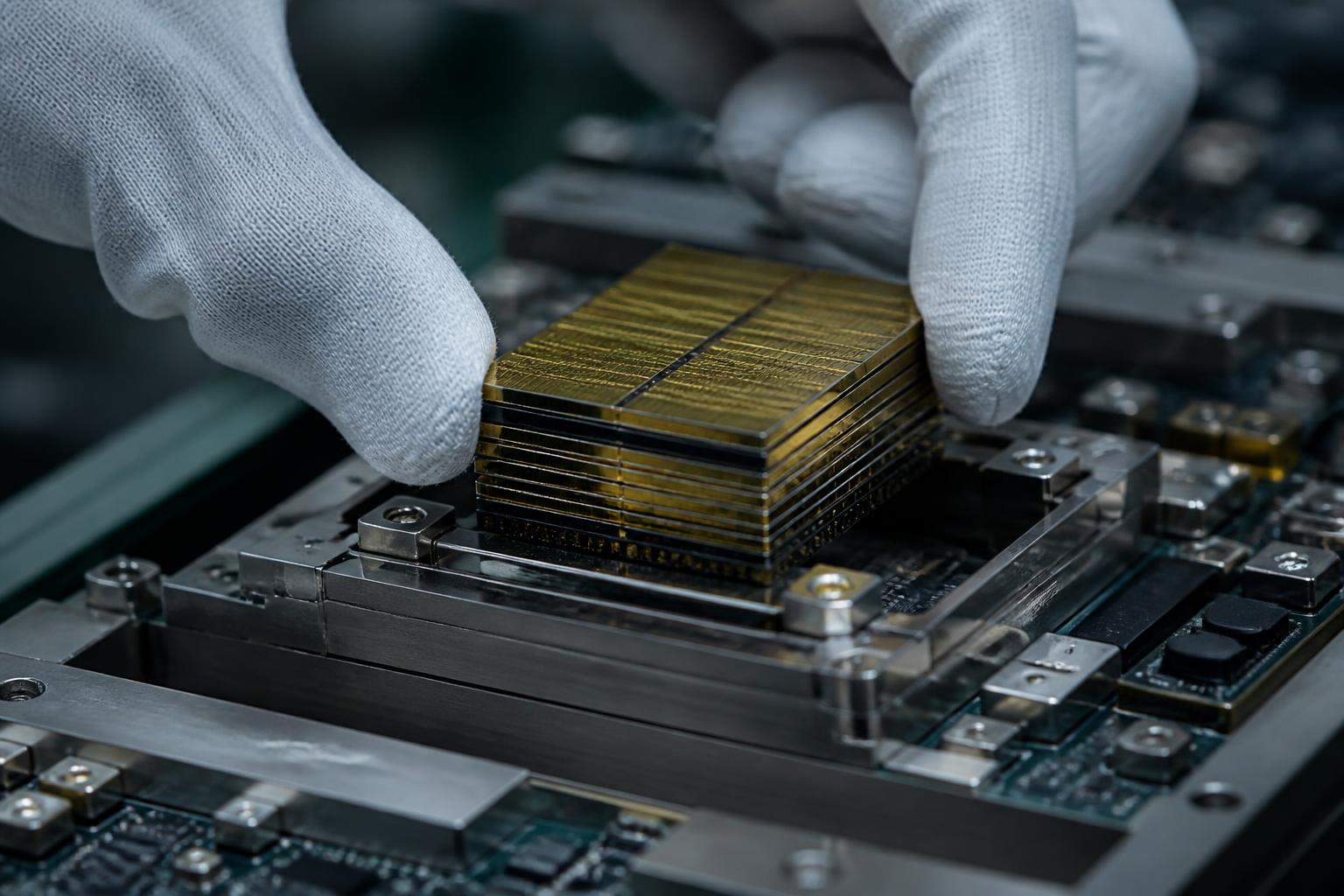
A Hacker News thread currently exploding is about something that might sound boring, but is actually quite alarming for the entire AI industry: memory has completely taken over AI chip accounting.
Epoch AI has published a detailed cost analysis of AI chip components, and the numbers are significant. High Bandwidth Memory — the HBM everyone is talking about — now accounts for almost two-thirds of the total cost of a finished AI accelerator card. This means that the processor chip itself, all the logic work, has become a relatively small part of the bill.
The comment section on HN is a mix of «obviously, it's been coming» and «wait, is it really that bad?». And it's precisely that tension that makes this interesting.
Why is this happening? HBM is extremely expensive to produce. It requires advanced 3D stacking, tight integration with the logic die, and the supply chain is dominated by only a couple of players (SK Hynix, Samsung, Micron). Demand from Nvidia, AMD, and the major hyperscalers has driven prices sky-high, and there isn't enough capacity to meet the growth in AI training and inference workloads.
What makes this more than just a price story is that it undermines the very business model for AI hardware. If two-thirds of the costs are in memory, and you don't control the memory supply, you are vulnerable in a way that is difficult to hedge against.
On the bright side: the underground is buzzing with talk that alternatives are starting to emerge. Saimemory (backed by Intel and SoftBank) aims for an HBM alternative with half the power consumption — but prototypes won't arrive until 2027 at the earliest. NEO Semiconductors' 3D X-DRAM passed proof-of-concept validation in April 2026, with promising latency figures. D-Matrix's Pavehawk platform, which combines 3D-stacked DRAM with logic, boasts 10x better bandwidth than HBM4 per stack.
But «promising» and «in production» are two very different things. Until these technologies scale, AI chip costs are practically memory costs — and that's a problem no single player can solve alone.
This is an early signal from community sources and independent research data, not yet confirmed by major chip manufacturers. But when HN threads with nearly 500 comments are about memory economics on a Monday, it's usually a sign that mainstream tech media is two weeks away from picking it up.
Keep an eye on who announces memory partnerships or vertical integration strategies in the coming quarters. That will tell you a lot about who has read these numbers.