 APREX · EST. 2026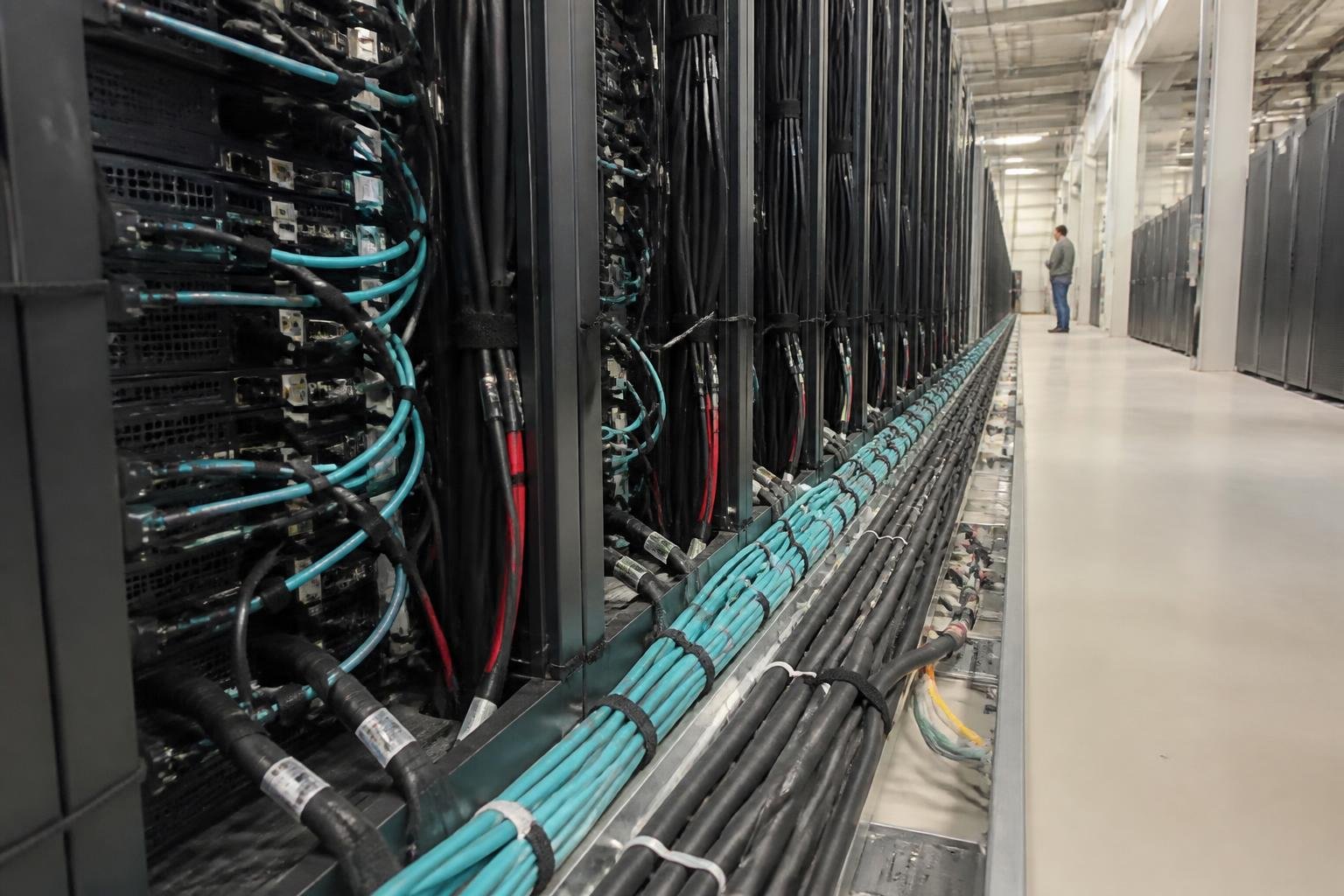
SpaceXAI, the technology company that emerged from the merger of Elon Musk's xAI and SpaceX, released its latest large language model Tuesday evening: Grok 4.5. The company positions the model as its most powerful product to date, primarily targeting software developers and financial users who need capable, long-running reasoning tasks.
Musk: "Opus-Class, But Faster and Cheaper"
In a post on X, Musk described Grok 4.5 as an "Opus-class model, but faster, more token-efficient and lower cost", according to TechCrunch. He drew a direct comparison with Anthropic's Claude Opus series, long regarded as a benchmark for powerful commercial models.
It is important to note, however, that these are Musk's own words — not an independently verified benchmark result. As of early July 2026, no official MMLU benchmark figures for Grok 4.5 have been published by either SpaceXAI itself or independent evaluation bodies. The company has shared an internal comparison chart which, according to them, shows Grok 4.5 outperforming Anthropic's Opus 4.8 on several tasks, but the chart has not been externally verified.
"Opus-class model, but faster, more token-efficient and lower cost" — Elon Musk on Grok 4.5
Pricing Strategy: Aggressive Undercutting
Where SpaceXAI truly stands apart is on price. Grok 4.5 costs $2 per million input tokens and $6 per million output tokens. By comparison, Anthropic charges $5 and $25 for equivalent usage of Opus 4.8 — more than four times as much on the output side.
OpenAI's GPT-5.6 Luna is priced at $1 in and $6 out, making it a more direct competitor to Grok 4.5 on cost. The pricing war in the AI market is clearly intensifying.
Built for Coders and Wall Street
Grok 4.5 is not a generalist chatbot. SpaceXAI has explicitly targeted the model at two segments: software development and the financial industry. According to the company, the model is designed for long-running, complex tasks in software engineering, legal analysis, and financial work, and also includes cybersecurity capabilities.
During development, the model was built in collaboration with Cursor, an AI coding startup that SpaceX acquired for $60 billion. It is based on xAI's 1.5 trillion parameter V9 foundation model and was trained on tens of thousands of NVIDIA GB300 GPUs at xAI's data centers in Memphis.
Availability and Integrations
The model is already live in Grok Build and is available across all Cursor subscription tiers. It serves as the default model in Grok Build and is accessible via the SpaceXAI console and the xAI API. In addition, Grok 4.5 is available as a plugin for Microsoft Word, PowerPoint, and Excel, and is supported by model gateways including OpenRouter, Vercel, Cloudflare, Snowflake, and Databricks Mosaic.
X Premium and SuperGrok subscribers can also use the model directly through the Grok interface.
A Note of Caution on Benchmark Claims
The company itself acknowledges that Grok 4.5 is not the outright strongest option on the market across every metric — and that it expects to close the gap with its largest competitors going forward. Combined with the absence of independent benchmark data, claims of "Opus-class performance" should be read with a degree of skepticism until third parties have systematically evaluated the model.