 APREX · EST. 2026
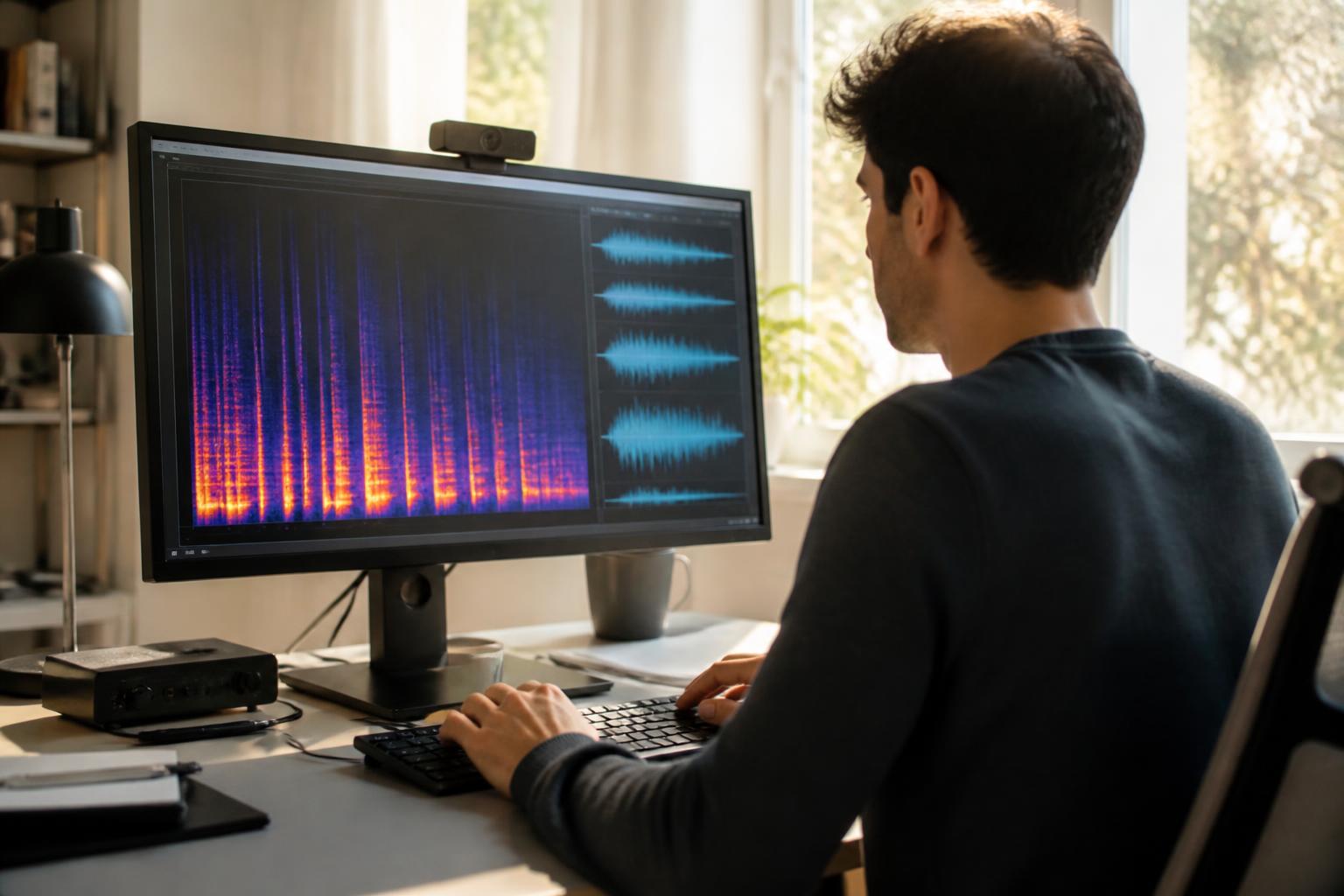
A spectrogram is essentially just an image — a visual representation of sound frequencies plotted over time. It is not an audio recording. Nevertheless, it proved to be enough.
The Plane Crash That Triggered the Crisis
In 2025, a UPS cargo plane, Flight 2976, crashed near Louisville, Kentucky. As part of its standard accident report, the US National Transportation Safety Board (NTSB) published a spectrogram file in its public document archive. Releasing the actual cockpit voice recording (CVR) is prohibited by federal law in the US, and the NTSB had meticulously followed the regulations.
The problem was that lawmakers had not foreseen what advanced AI would make possible.
Popular science commentator Scott Manley pointed out that spectrograms mathematically encode audio data into an image — and that it is technically possible to reverse this process. It didn't take long for individuals to take up the challenge seriously. Using the AI tool Codex, combined with publicly available transcripts from the accident, they managed to generate audio clips that recreated the two pilots' voices and their last conversations in the cockpit.
The clips were spread online.
The situation is deeply disturbing. These voices belonged to people who lost their lives — and now they are circulating without consent.
NTSB Shut Down the Archive
NTSB Chair Jennifer Hommendy described the incident as «deeply disturbing» and urged social media platforms to remove the AI-generated recordings, according to research material. The commission took the dramatic step of removing its entire public document system from the internet. Even after access was restored, 42 investigation threads — including that for Flight 2976 — remained closed for review.
The NTSB has not yet announced permanent policy changes for how spectrograms will be handled in future dossiers.
A Legal Void
The core problem is that US federal law prohibits the public release of cockpit voice recordings but says nothing about the reconstruction of audio from non-audio files like spectrograms. This has created a legal gray area for which neither the commission nor lawmakers have a clear answer.
Legal experts cited in the research material suggest that the incident may force Congress or federal regulators to re-evaluate what is legally defined as a «recording» — and whether data that can be algorithmically converted to audio should be subject to the same restrictions as original audio files.
Policies built on assumptions about what raw signal data could reveal are now, as one expert put it, «empirically broken» by AI.
Broader Consequences: Fraud, Courtrooms, and Grief
The ethical dimension extends far beyond aviation safety. The research material documents three serious issues:
Consent and Dignity: Deceased individuals cannot consent to their voices being recreated. Zelda Williams, daughter of the late actor Robin Williams, has publicly condemned AI-generated content using her father's voice as «disrespectful,» «creepy,» and a «Frankensteinian monster,» according to the source material.
Fraud and Deception: The FBI has warned of a sharp increase in AI voice cloning used for fraud — including «family emergency» scams where geriatrics are tricked into believing a family member is in danger, and «vishing» attacks against businesses where AI mimics the voice of executives.
Evidence in Court: Studies referenced in the source material show that listeners rated real voices and AI-cloned voices as the same person in approximately 80 percent of cases. Under current US rules of evidence, a witness's recognition of a voice may still be sufficient to authenticate a recording — even if it is an AI clone.
What Happens Next?
The NTSB has not provided a timeline for when the 42 closed cases will reopen, or whether spectrograms will be removed from future public dossiers. The question of new legislation also remains unresolved.
What is clear is that this is not an isolated incident — it is a symptom of a broader technological shift where the boundary between data and audio, between image and voice, has ceased to exist in the way lawmakers once assumed.