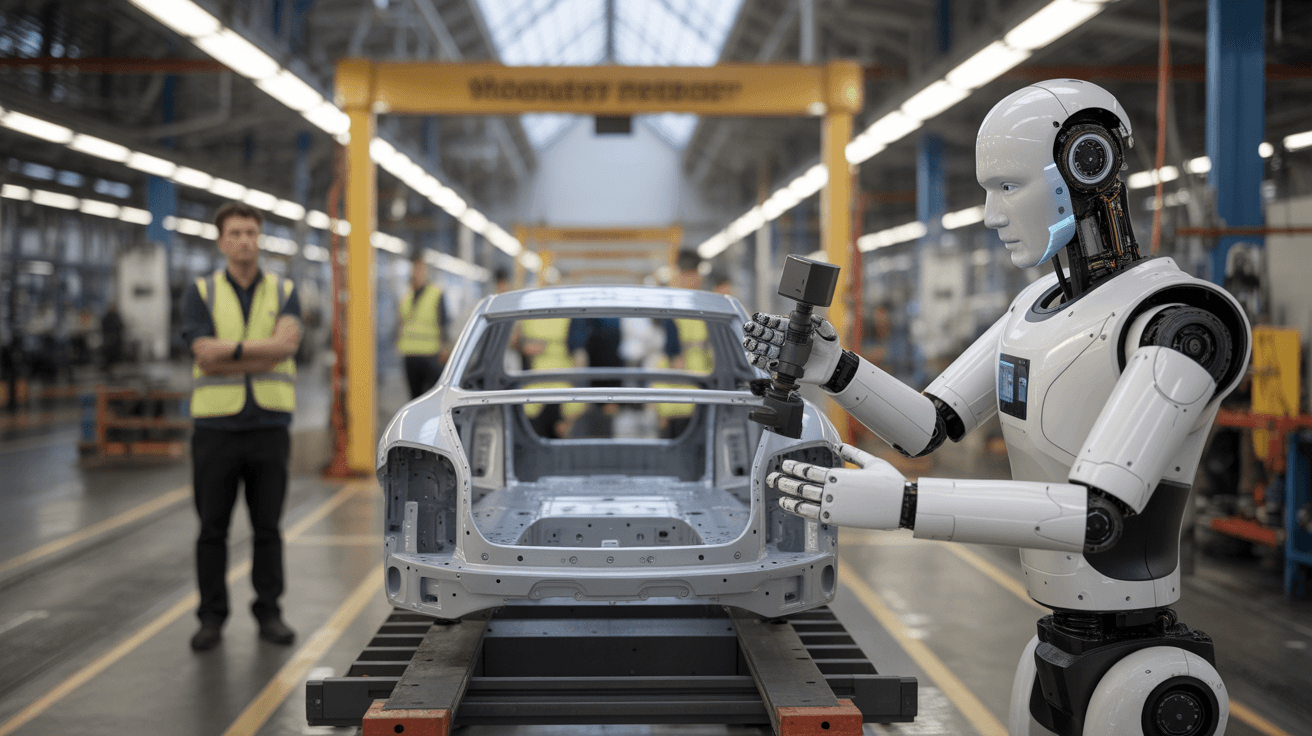
A trending thread on r/singularity has just woken up the community: Xiaomi has shared three hours of autonomous production data from its Beijing EV factory, and what people are reacting to isn't the marketing — it's that the numbers actually look real.
The task the robots solved is dry and technical: bilateral installation of self-tapping nuts on integrated die-cast parts. In other words, not a showroom stunt, but a repetitive, demanding assembly job where precision actually matters for product quality. The result was a 90.2% success rate and a cycle time of 76 seconds — which, according to Xiaomi, matches what the production line actually requires.
The technically interesting aspect here is the approach. Xiaomi uses a VLA (Vision-Language-Action) model that fuses visual input with data from fingertip sensors. It's this combination that people on HN and Reddit are discussing most intensely — that real-time sensory feedback is integrated directly into the decision-making loop, not just used as a correction signal afterwards.
The context makes this even more interesting. Competitors are numerous — Tesla Optimus, Figure AI, Agility Robotics' Digit — but most have not yet delivered production data on this scale. AgiBot and Unitree lead in volume (approximately ~5100 and ~4200 units delivered in 2025, respectively), but Xiaomi's focus seems to be on proving performance per robot, not just scaling numbers.
What does this mean going forward? The community is split. Some point out that 90% still means one in ten attempts fail — and in a high-volume production line, that can get expensive. Others believe the threshold for «good enough» is much lower than people think, especially when robots can work 24/7 without break requirements.
What we know for sure: ROI figures for humanoid robots in the industry are moving in the right direction — McKinsey estimates a payback period of 2.8 years on average now, down from over five years in 2019. Xiaomi's data helps make that business case more concrete.
Important caveat: These are early signals from community sources. The data has been shared by Xiaomi itself, not independently verified. Treat it accordingly — but it's definitely worth keeping an eye on what comes out of this in the coming weeks.