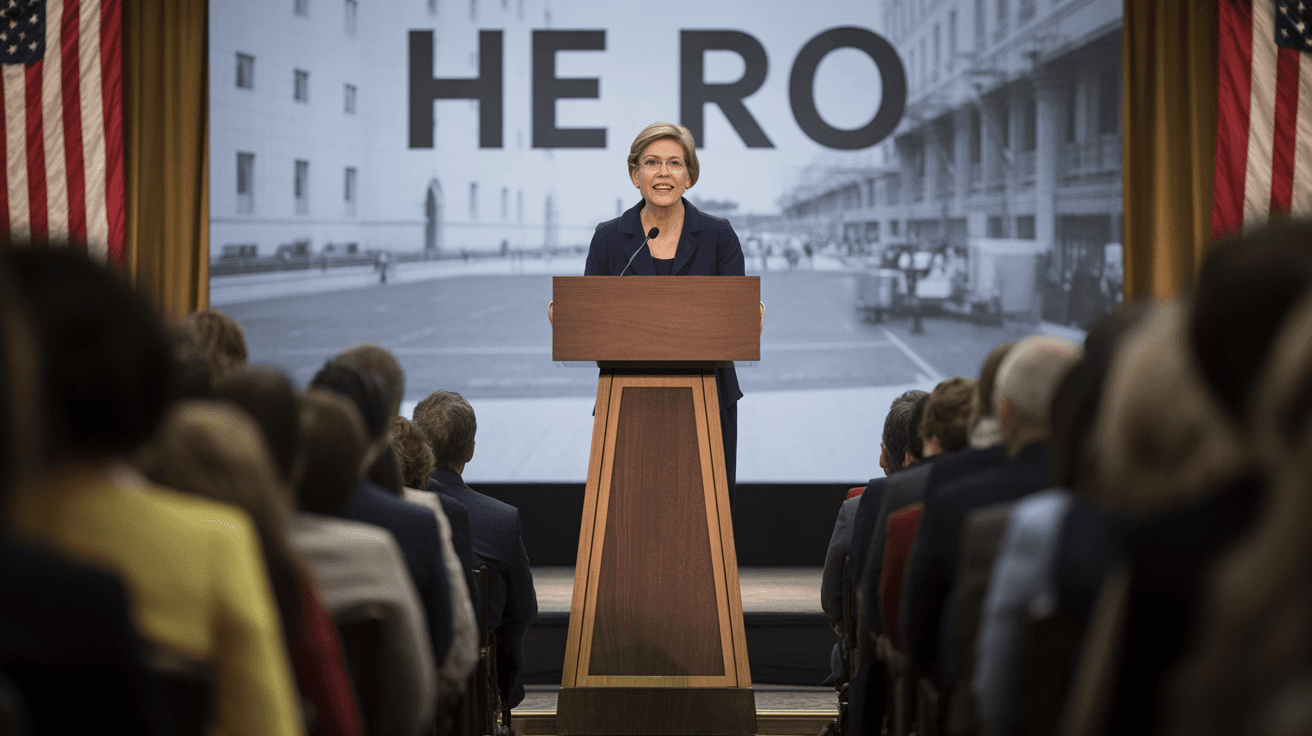
Senator Elizabeth Warren – the architect behind the U.S. Consumer Financial Protection Bureau (CFPB) after the 2008 collapse – argued on Wednesday that the AI industry's explosive growth bears alarming similarities to the buildup of the previous major financial crisis. During an event hosted by the Vanderbilt Policy Accelerator in Washington D.C., Warren said she recognizes the pattern, according to The Verge.
"I Know a Bubble When I See One"
Warren has personal experience with what happens when speculative investments meet reality. She highlighted what she described as striking similarities between AI companies' current borrowing and spending patterns and the practices that preceded the 2008 collapse. While she acknowledges that the technology has enormous potential, it is the financing structure that worries her.
"I know a bubble when I see one" — Senator Elizabeth Warren
There is no shortage of companies sharing that concern. Central banks, hedge fund legends, and academics have all recently warned about the same issue.
Extreme Valuations Without Corresponding Earnings
The numbers behind the concerns are concrete. According to analysis data, most AI startups are valued at between 10 and 50 times their revenue, with an average around 47 times – in comparison, traditional software companies typically trade at 7 times revenue.
OpenAI was valued at $14 billion in 2021. By 2025, that number had grown to $340 billion – despite the company itself estimating cumulative losses of $44 billion between 2023 and 2028, and not expecting profitability until 2029. Competitor Anthropic was valued at $380 billion in February 2026, according to available market data.
NVIDIA, which supplies much of the infrastructure the AI industry relies on, reached a market capitalization of approximately $4.3 trillion in February 2026 and traded at a P/E ratio around 47 times – four times the historical average for the S&P 500 index.

Experts: "Resembles the Dot-Com Bubble"
Warren is far from alone. Ray Dalio of Bridgewater Associates stated in early 2025 that today's AI investment is "very much" reminiscent of the dot-com period. Jamie Dimon of JPMorgan believes some of the capital will prove wasted and says there is an increased probability of a noticeable stock market decline in the next two years. The Bank of England's Financial Policy Committee characterized AI technology stocks as "stretched" across several key metrics in October 2025 and warned of a possible sharp correction.
A study from the Massachusetts Institute of Technology found that nine out of ten organizations investing in generative AI currently cannot demonstrate any measurable return on investment – a finding that questions whether the enormous capital outlay is rooted in real value creation.
Similarities to the Dot-Com Bubble
Several observers point to structural parallels with the internet bubble around the turn of the millennium: intense technological optimism, speculative capital flows, and valuations detached from actual revenues. The phenomenon of "buzzword inflation" is repeating itself – where "AI-powered" today serves the same function as ".com" did in the 1990s to attract investors.
Key Differences from the 1990s Bubble
The picture is not unambiguous. Analysts point out that today's AI companies, unlike many dot-com companies, actually have real products, paying customers, and significant infrastructure behind them. NVIDIA sells hardware for concrete use, and large language models are already widely used in business. The question is not whether the technology is real – it is whether the pricing credibly reflects future earnings.
Marina Davidova of venture capital firm DVC summarized the dilemma: AI is producing some of history's fastest-growing companies, but it has never been harder to distinguish real growth from inflated figures, according to available market analysis.
What's at Stake
Warren's warning is not primarily about shareholder losses. What she fears is systemic: that massive debt financing and excessive exposure in the financial sector to AI assets could create ripple effects that harm ordinary consumers and the entire economy – as subprime loans did in 2008. Whether she is right remains to be seen. But the chorus of warnings from central banks, hedge funds, and academia suggests that the issue is worth taking seriously.