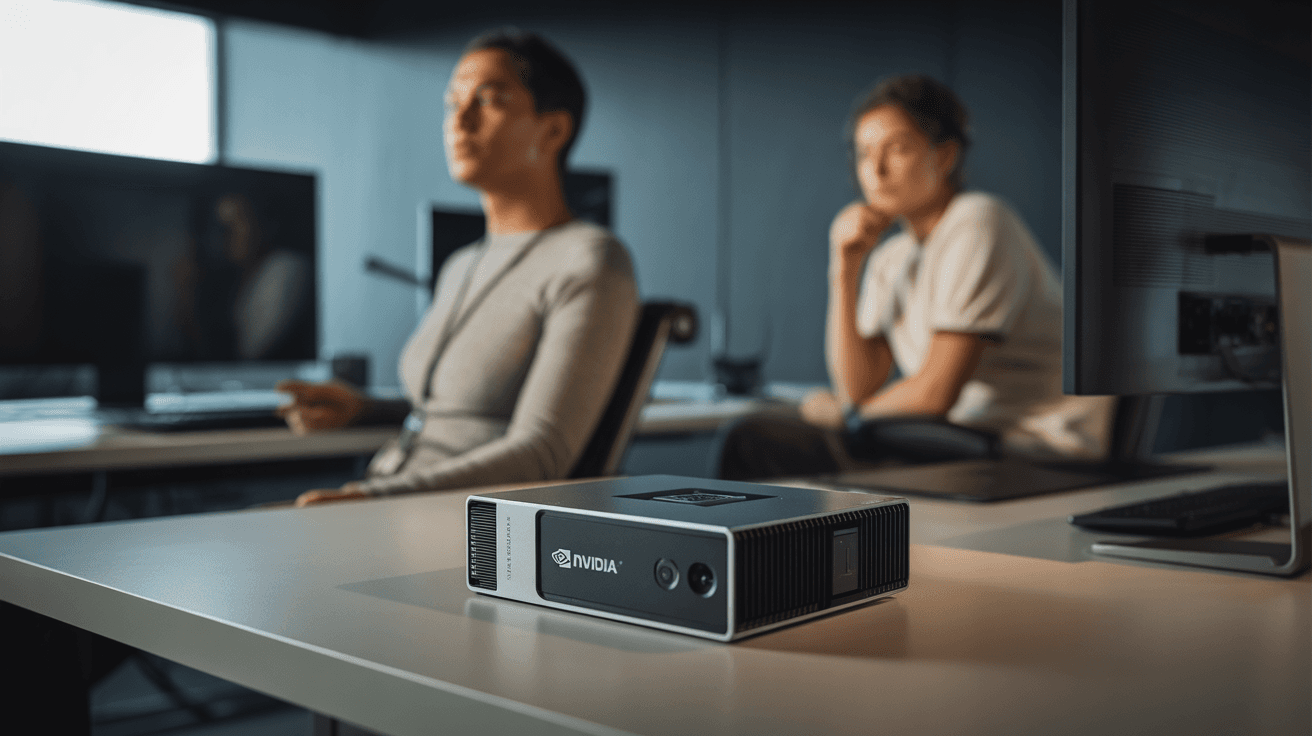
From Personal Computer to Personal AI Agent
For decades, personal computing has revolved around one thing: a device tailored to a single individual. The PC, the smartphone, the tablet — all variations on the same theme. At NVIDIA GTC 2026, the company argued that we are now at the beginning of a new era, where the device is not just a tool, but an active AI agent acting on behalf of the user.
According to the NVIDIA AI Blog, it is generative AI — and especially open models like NemoClaw — that is driving this category shift. Machines like the DGX Spark desktop supercomputer and dedicated RTX PCs are, according to the company, ideal platforms for running such agents entirely locally.
Generative AI has introduced an entirely new category: agent computers — machines that not only compute, but act.
DGX Spark: Supercomputing Power on Your Desktop
DGX Spark is NVIDIA's answer to the need for local AI inference with heavy computational power. The device is designed as a compact desktop machine, but with performance that previously required rack-mounted server equipment. The goal is to allow researchers, developers, and advanced users to run large, open models without sending data to external servers.
RTX PCs with the latest GPU generations fill a similar role for a broader audience. NVIDIA positions these as “AI PCs” in the most literal sense of the word — not machines that connect to AI in the cloud, but machines that are AI infrastructure themselves.
A Race for Local AI Performance
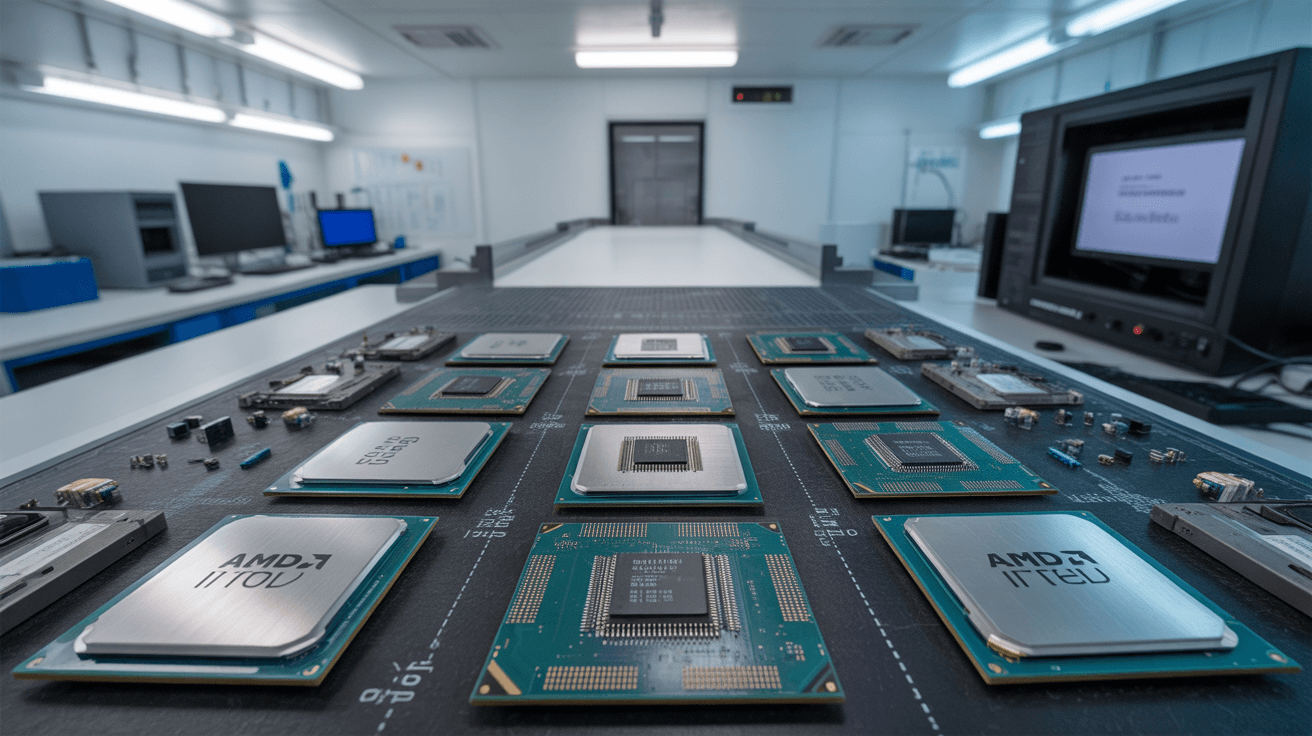
NVIDIA's GTC initiative does not happen in a vacuum. The entire industry has accelerated the development of local AI processing over the past two years. According to available industry research, AMD, Intel, and Apple have all invested heavily in dedicated neural processing units (NPUs) integrated into their processors.
AMD stood out as a strong player in 2024 with the Ryzen AI 300 series, which delivers 50 TOPS (trillions of operations per second) from the NPU alone — well above Microsoft's Copilot+ PC requirement of 40 TOPS. The Ryzen AI 9 HX PRO 375 delivers a full 55 NPU TOPS, according to AMD itself.
Intel, for its part, has focused on the OpenVINO platform and Core Ultra processors. The company stated a goal of shipping over 40 million AI PC chips in 2024, with an ambition of more than 100 million by the end of 2025 — but the early Core Ultra generations fell below the 40 TOPS threshold.
Apple continues to leverage its tightly integrated M-series architecture. The M4 chip, launched in iPads in 2024, delivers 38 TOPS from the Neural Engine, while overall system performance is further boosted by the unified memory architecture that makes Apple silicon a competent platform for local language models.

Privacy and Sovereignty as a Selling Point
One of the most obvious advantages of local execution is that sensitive data does not leave the device. For businesses and professionals who work with confidential information, this can be crucial. NVIDIA implicitly highlights this through its “personal AI” rhetoric: the agent is yours, the data is yours, and the infrastructure is yours.
It is worth noting that NVIDIA's presentation at GTC 2026 is naturally marketing-oriented. Independent performance tests of DGX Spark against actual workloads with NemoClaw and similar models remain to be seen on a larger scale from neutral testing environments.
What's Next?
The industry is moving fast. AMD has already announced the Ryzen AI 400 series for availability in the second quarter of 2026, and embedded variants with up to 80 system TOPS are on the way. NVIDIA, for its part, is building an ecosystem around RTX and DGX Spark that extends from hardware to models and developer tools.
For end-users and businesses, this means increased freedom of choice — and a real alternative to cloud-based AI, which has dominated the discussion in recent years. Whether “agent computers” actually become an established product category, or remain a marketing term, time will tell.