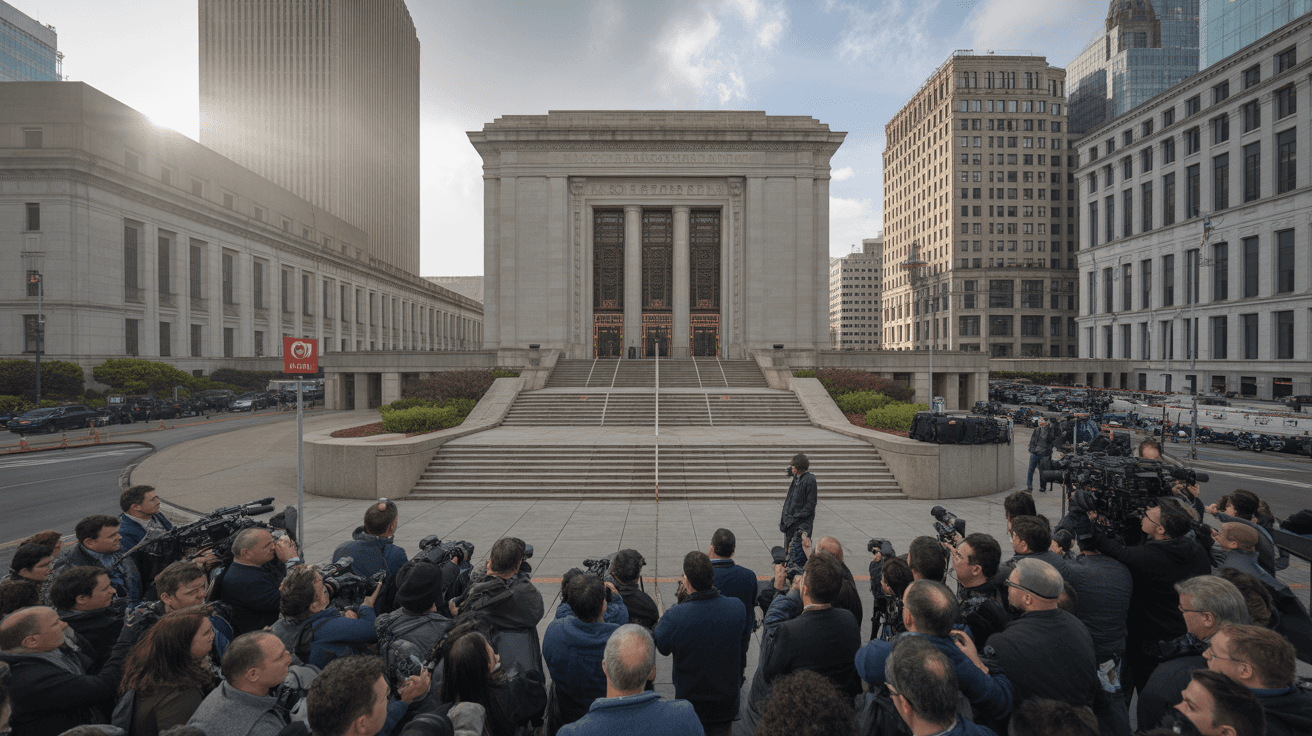
One of the tech world's most explosive conflicts is nearing its preliminary climax in an American courtroom. Elon Musk, OpenAI co-founder and early investor, has sued Sam Altman and the company he leads — accusing them of abandoning the original vision that laid the foundation for the organization.
What the Lawsuit is About
OpenAI was founded with an explicit promise: to ensure that artificial general intelligence (AGI) benefits all of humanity. According to Wired, it is precisely this promise that is now subject to legal scrutiny. Musk claims that under Altman's leadership, the company has drifted away from non-profit operations and into commercial ventures — at the expense of its safety and ethics mandate.
In recent years, OpenAI has restructured itself into what is called a «capped-profit» model, where investors can earn money, but with limitations. Critics, including Musk, believe this has practically shifted the company's priorities away from openness and safety.
A jury will soon decide whether OpenAI has abandoned its fundamental promise to humanity — and the answer could change the rules of the game for the entire AI industry.
OpenAI's Position and the Criticism Against It
OpenAI maintains that the company's mission remains intact: «to ensure that artificial general intelligence benefits all of humanity.» The company argues that commercial earnings are a prerequisite for funding the expensive research that AGI development requires.
But dissenting voices are numerous. Critics point out that the company has admitted it currently lacks adequate methods to control superintelligence, that its source code is largely closed — contrary to the name «Open AI» — and that the growth of commercial partnerships with Microsoft creates conflicts of interest.
Alternatives: How Others Are Working on AGI Safety
The ongoing lawsuit highlights a broader question: Are there better models for developing AGI in a way that truly benefits humanity?
Several organizations are positioning themselves as alternatives to OpenAI's approach. Anthropic, founded in 2021 with a total funding of $7.6 billion, builds its operations around what it calls «constitutional AI» — a technique where ethical and legal frameworks are embedded into the training process itself. The company also has an internal policy called «Responsible Scaling Policy,» where new models are halted from public release if deemed too risky. For example, an internal research project was stopped after the model autonomously managed to discover thousands of unknown security vulnerabilities.
Google DeepMind, for its part, has established its own AGI Safety Council led by co-founder Shane Legg, and collaborates with external research organizations such as Apollo and Redwood Research to obtain independent safety assessments.
SingularityNET, led by AI researcher Ben Goertzel, takes a more decentralized approach, arguing that AGI development must be governed by a broad community — not by individual companies with commercial interests.
What the Outcome Could Mean
Regardless of the jury's conclusion, the lawsuit will leave its mark on the AI industry. If Musk prevails with his accusations, it could pave the way for founders' statements of intent in tech companies to gain legal weight — which would be new territory in American corporate law.
If OpenAI is acquitted, however, it could be interpreted as confirmation that companies have significant leeway to restructure themselves, even when it goes against their original mandate.
The Center for AI Safety, a non-profit research organization, issued a statement in 2023 about the risk of human extinction due to AI — signed by, among others, Sam Altman, Yoshua Bengio, and Geoffrey Hinton. The fact that Altman himself signed such a warning does not make it easier to understand the direction OpenAI is actually moving in.
The case is being closely watched by the entire tech sector. The outcome could become a milestone in the discussion about who AGI should truly serve.