
Google has officially presented Nano Banana 2, internally known as Gemini 3.1 Flash Image, as the company's most advanced model to date for image generation and editing. According to Google's AI blog, the model is designed to combine the quality level of the Pro model with the speed of the Flash architecture — a promise of high performance at a lower cost and shorter waiting time.
What is Nano Banana 2?
Nano Banana 2 is positioned as an efficiency-oriented alternative to Gemini 3 Pro Image, aimed at developers and businesses with a high volume of image generation tasks. Google describes the model as designed for applications where speed and scalability are critical.
The model is not just a scaled-down version of the Pro variant — Google claims that it delivers comparable image quality across most use cases, potentially making it an attractive tool for everything from advertising production to content platforms.
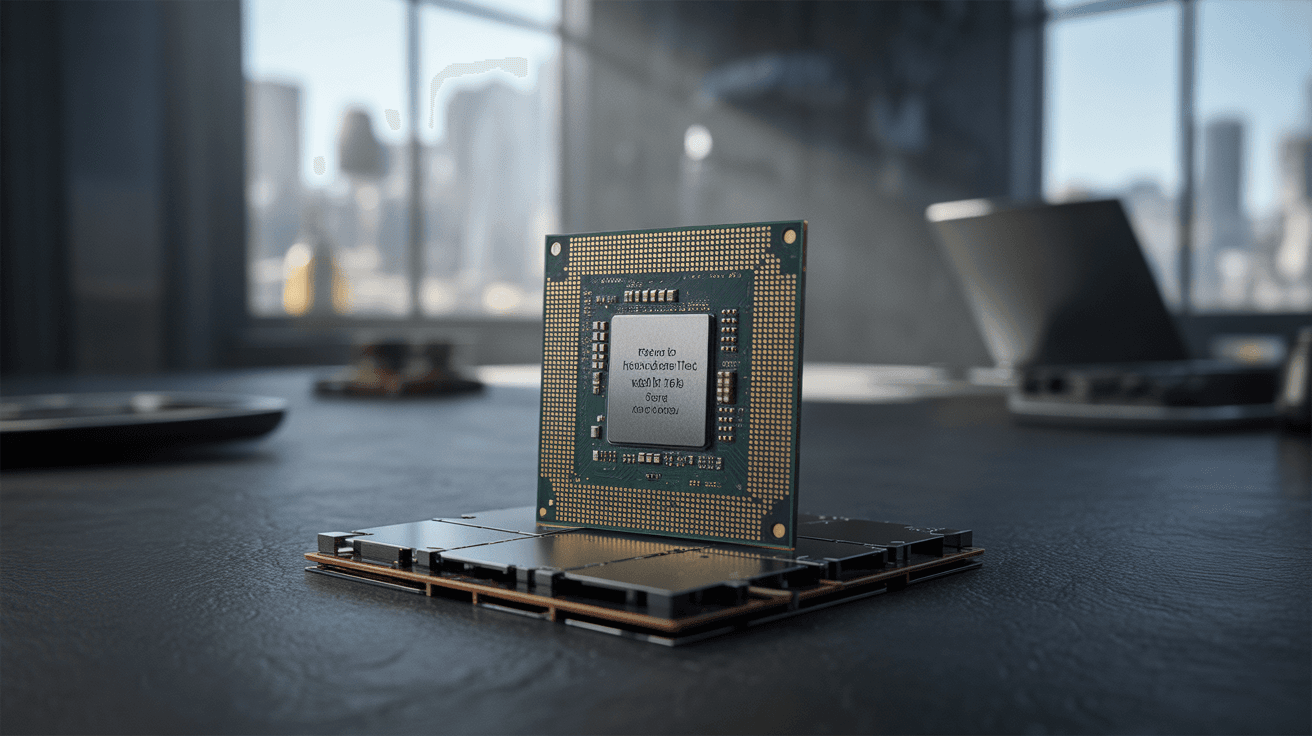
Technical specifications
According to available information about the model, Nano Banana 2 supports the following:
Resolutions and format: The model generates images in 0.5K, 1K (standard), 2K, and 4K, with flexible aspect ratios adapted to various platforms and formats.
Character consistency: The model should be able to maintain visual consistency for up to five characters and 14 objects within a single workflow — a feature particularly useful for storyboarding and serial content.
Text rendering: A recurring criticism against AI image generators is imprecise text in images. Google states that Nano Banana 2 handles precise text rendering, including localization and translation of text within images.
Instruction following: The model is designed to follow complex, multi-part instructions more closely than previous versions. Cloud architect Lynn Langit, who works with cloud-based data pipelines, states according to the research source that the model shows “a clear improvement in following complex instructions — such as removing a hat and changing the color of a dress — while preserving the integrity of the subjects.”

Availability and integrations
Nano Banana 2 is already available via the Google AI API for developers and is in the process of being rolled out in Google's own products, including Google Search, the Gemini app, and Google Ads. Workspace customers are also expected to gain access to the model.
Pricing has not been officially confirmed, but based on available information, the cost is estimated to be 30–50 percent lower than for the Pro variant — which, if true, would make the model competitive for high-volume applications.
Competition and positioning
Google's Nano Banana 2 enters a market where Midjourney has long been considered the quality leader for artistic and photorealistic images, while OpenAI's image models have dominated in instruction following and integration into workflows.
The direct predecessor to Nano Banana 2 is said by Google to have performed well against Midjourney in blind tests, but independent, systematic comparison of the new model has not yet been published. Claims about quality levels should therefore be treated with some caution until third-party analyses are available.
What Google does have a clear advantage in, however, is infrastructural integration: access via existing Google platforms, search, and Workspace lowers the adoption threshold for businesses already within Google's ecosystem.
What does this mean for developers?
For developers and product teams considering image generation models, Nano Banana 2 offers an alternative that combines speed, integration, and — according to Google — high quality in one package. The model is available now via API under the designation gemini-3.1-flash-image-preview.
The source for this article is Google's official AI blog (blog.google) and associated technical documentation about the Nano Banana 2 launch.