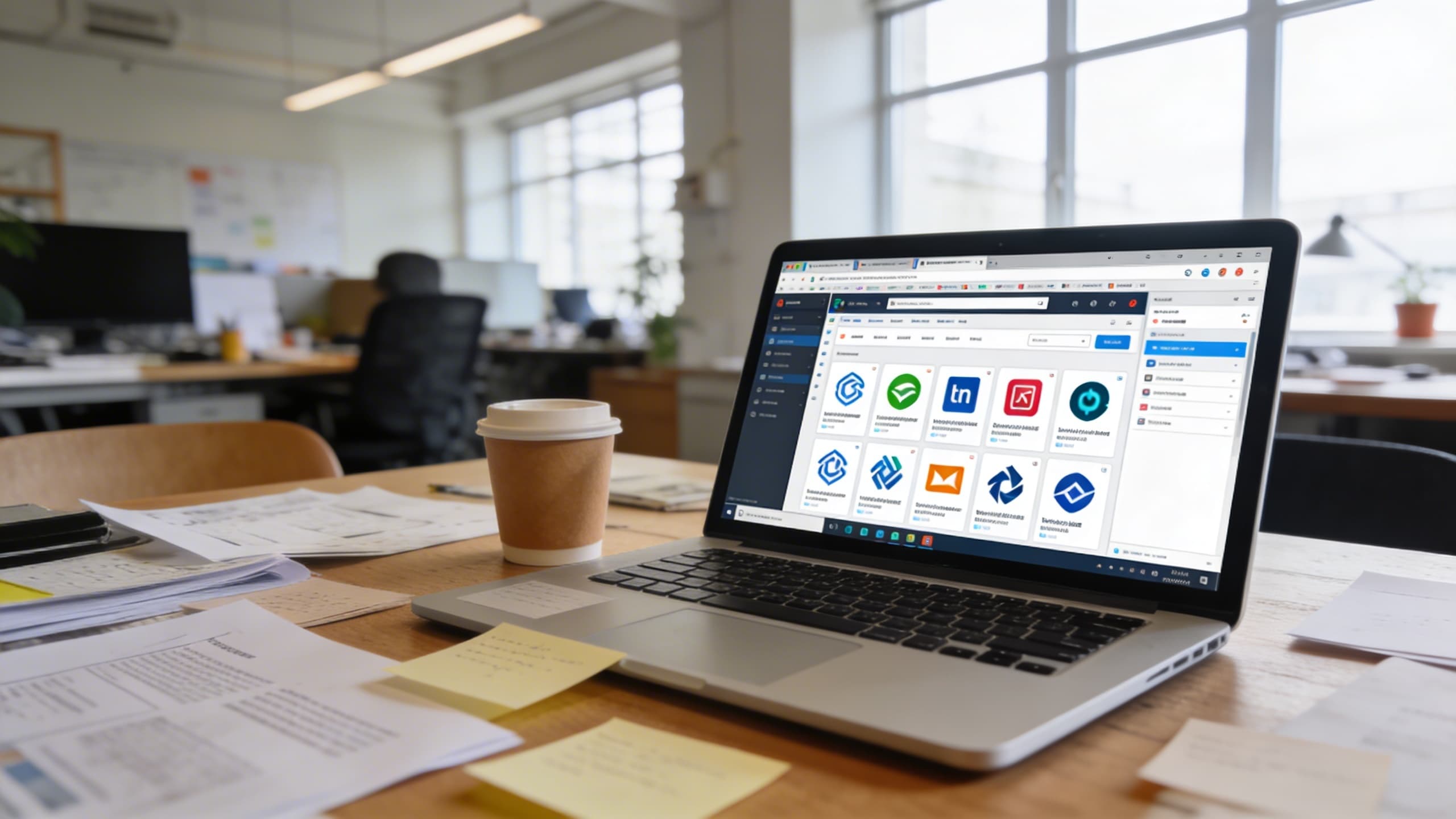
How dependent are we really on American technology companies in our daily lives? This is the question a journalist from the Danish-Norwegian trade media Ingeniøren/Digi.no is now putting to the test by attempting to replace Slack, Google, and Microsoft with European alternatives — for four consecutive weeks.
The experiment is not just a personal challenge. It reflects a growing political and business debate in Europe regarding digital sovereignty, especially following repeated concerns related to American cloud services and the EU's data protection regulation, GDPR.
Already on the first day: The challenges begin
According to Digi.no, the journalist faces setbacks as early as the first day of the experiment. This reveals something essential: even though European alternatives exist, workflows, colleagues, and systems are built around the major American platforms. Replacing one piece is rarely enough — the entire infrastructure must be rethought.
This is not surprising for those who follow the technology field closely. Microsoft 365 and Google Workspace dominate the office market globally, while Slack has long been the standard tool for team communication in the tech industry.
Digital sovereignty cannot be achieved without open-source software

What European alternatives are available?
There is no shortage of European alternatives — but quality and user-friendliness vary.
Nextcloud from Stuttgart, Germany, is perhaps the most comprehensive alternative. The platform is open-source and offers file storage, document collaboration, calendar, and video meetings through Nextcloud Talk. Many European public entities already use Nextcloud specifically to ensure that data remains within EU borders.
Element, based on the open Matrix protocol and originally from the UK, is used by the German armed forces, among others — with over 100,000 active users since its launch in 2020. The French public sector uses Tchap, also Matrix-based, with over 300,000 users. NATO is testing the protocol through the NICE2 project.
Wire, based in Switzerland with a presence in Germany, positions itself as a security-first alternative to Teams and Slack. Over 1,800 organizations use the service, including public agencies. Schwarz Gruppe, one of Europe's largest grocery chains, is among its well-known customers.
ONLYOFFICE, developed in Latvia, offers a complete suite for document editing for text, spreadsheets, and presentations — and can be integrated with platforms like Nextcloud.

The political dimension
The Ingeniøren journalist's experiment fits into a larger European trend. The European Commission has long pushed for digital autonomy, and in the wake of geopolitical unrest and discussions about US government access to cloud data, interest in European and open alternatives has increased significantly.
Matthew Hodgson, co-founder of the Matrix protocol and CEO of Element, has stated that European authorities are showing increasing interest in open-source IT precisely to reduce dependence on American giants. He believes digital sovereignty cannot be achieved without free software as a foundation — a claim cited by Digi.no in their coverage of the field.
What the experiment is actually testing
What the journalist from Ingeniøren is actually testing is not just whether the technology exists — it obviously does — but whether it is mature enough to function seamlessly in a professional environment where colleagues, customers, and systems are already woven into the Big Tech ecosystem.
This is the core problem for companies and public entities in the Nordics considering a shift: the network effect of Microsoft and Google is enormous. Switching platforms requires not just technical migration, but also training, changed work habits, and, not least, that partners do the same.
The results from the four weeks remain to be seen — but already on day one, the message is clear: European alternatives are available and mature, but the transition is far from frictionless.