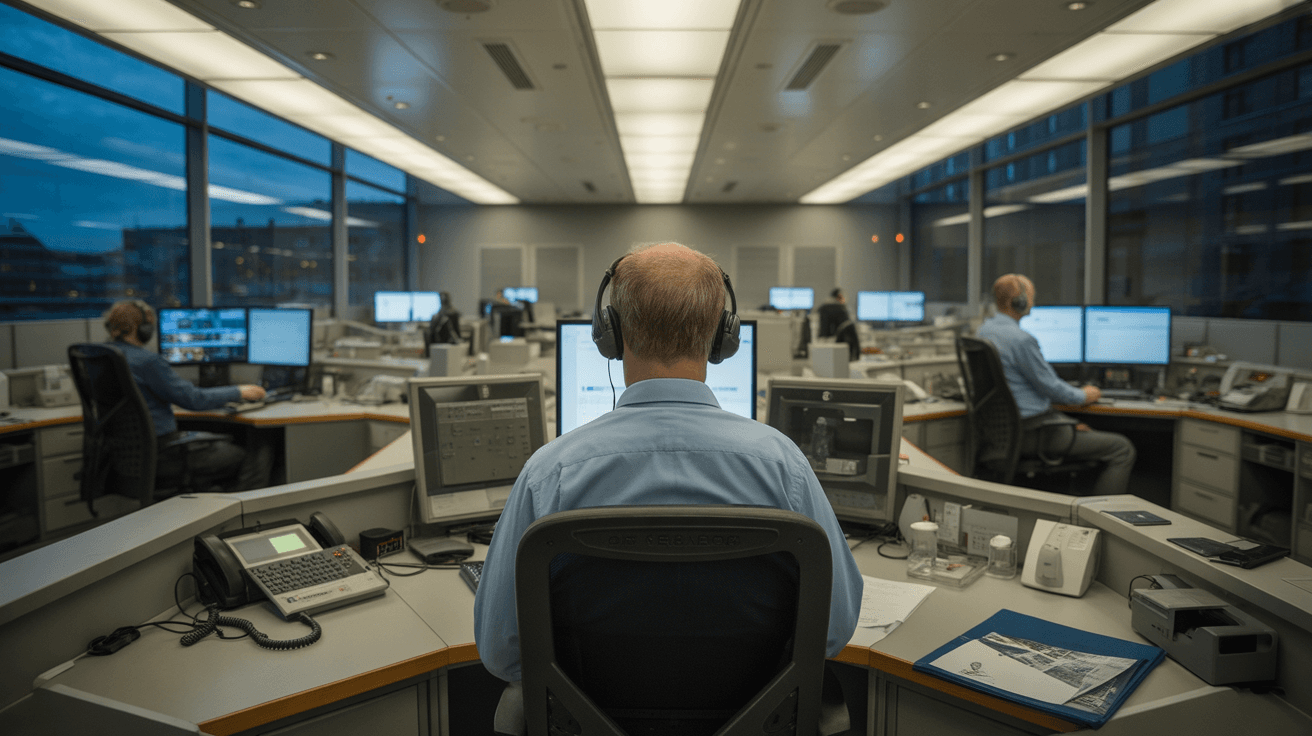
A Norwegian consortium consisting of the medical technology company Laerdal Medical, the University of Stavanger (UiS), and several emergency medical communication centers (AMK centers) is developing an AI-powered solution for handling emergency calls to 113. NRK reports this. The project aims to make the emergency response system faster and more accurate – and ultimately save lives that can currently be lost in fleeting seconds.
Norwegian Expertise Meets Global Trend
This initiative is not an isolated Norwegian phenomenon. Internationally, artificial intelligence is transforming how emergency centers operate. Systems based on natural language processing (NLP) and machine learning analyze incoming calls in real-time – evaluating everything from word choice and tone of voice to background noise to classify severity.
What makes the Norwegian project particularly interesting is the combination of clinical and academic expertise. Laerdal Medical has been a global player in emergency medical training and equipment for decades, while UiS contributes research environments in health technology. The AMK centers provide operational insights from actual emergency situations.

What AI Can Actually Do at 113
An AI system connected to an emergency number could, in principle, answer on the first ring, perform an immediate preliminary triage of the inquiry, and help the operator prioritize resources. Algorithms can analyze historical data, real-time traffic, and available ambulance resources to suggest optimal deployment.
For cardiac arrest cases – where every second is critical – such systems can make a real difference. Research cited in an international research overview shows that machine learning frameworks recognize cardiac arrest faster than human operators, which theoretically allows for earlier notification of the nearest helper.

Humans Remain at the Center
Despite the technology's potential, experts are clear that AI should not take over from human operators. It's about more than technical capacity: in extreme stress situations, human empathy and the ability to read between the lines are still crucial.
Research environments point to several challenges in implementation: data quality is crucial for algorithms to function correctly, and incorrect training data can reinforce existing biases in healthcare. There are also real concerns related to system errors – if an AI system misinterprets a critical call, the consequences can be severe.
Critical Questions Remain
Sources currently provide limited detailed information about the project's specific technical solutions, timeline, and funding. Nor is it known which AMK centers are participating, or how the system will be tested and validated before potential implementation. 24AI will continue to follow the project as more information becomes available.
The Norwegian healthcare system already has experience with technology-driven emergency assistance – including through the use of cardiac arrest registries and SMS alerts for volunteer defibrillator users. An AI layer on top of 113 could potentially significantly strengthen this system, provided that development and implementation occur with a high degree of clinical grounding and thorough testing.